TL;DR
Yoga mats with alignment lines use visual marks such as centerlines and hand or foot guides to help you orient yourself and repeat a pose setup. Treat the marks as flexible starting points: they cannot judge comfort, account for every body, or guarantee safety, so choose a mat for its grip, cushioning, size, material, and care instructions too.
Your left foot lands a few inches farther forward than your right, and Downward-Facing Dog starts to feel a little crooked. A line down the middle of your mat can give you a quick visual reference, like a quiet lane marker under your hands and feet. It can help you get oriented without turning your practice into a geometry lesson.

Get workout gear delivered free with Prime
- Fast, free delivery on millions of items
- Prime Video, Amazon Music and more included
- Member-only deals all year
Yoga mats with alignment lines, also called alignment mats, use printed or etched marks to suggest where you might place your hands, feet, or body. In this article, you’ll learn what different guides can help with, where their limits show up, and how to choose a mat that fits your practice. The key is to use the lines as a starting point, then pay attention to what feels steady and comfortable in your own body.
Use a centerline or hand and foot marks as visual starting points for orientation and repeatable setups.
Adjust any suggested placement to suit your proportions, mobility, comfort, and pose variation.
Compare grip, material, thickness, mat size, cleaning instructions, and weight alongside the guide design.
A detailed grid offers more reference points, while a simpler centerline may feel less distracting.
Stop or modify poses that cause pain; ask a qualified teacher or healthcare professional for guidance when appropriate.
See what the lines can help you do in a solo practice
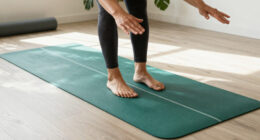
Yoga mats with alignment lines give you visual landmarks for centering yourself and beginning a pose. Depending on the design, you may see a centerline, crosswise marks, or suggested hand and foot positions. Those guides can make a home session easier to set up when there’s no teacher beside you to offer a reminder.
Suppose you’re practicing Warrior II in the living room before work. You can use a crosswise mark as a prompt to check whether your feet are spread comfortably across the mat, then look down the centerline to notice if your torso has drifted to one side. When you repeat the pose on the other side, the same visual reference gives you a familiar place to begin.
That repeatable setup is the useful part. A marked mat can help you spot that one hand always starts closer to the top edge, or that you tend to step your feet much closer together on one side. These are observations, not proof that a pose is wrong. A line can show where your foot is; it can’t tell you whether your stance feels stable or suits your body.
Use the markings as a prompt to notice your position. Let comfort and qualified instruction guide adjustments.
Some people like a full grid because it provides several reference points. Others find a single centerline easier on the eyes. If you’re new to practice, a calmer design may feel like a helpful whisper, while a busy pattern can feel like a map spread across your whole floor.
Products Worth Considering

BowFlex Results Series 552 SelectTech Adjustable Dumbbell

LEVOIT Vital 200S-P Smart Air Purifier for Large Rooms, White

Garmin Forerunner 245 Music GPS Running Smartwatch, Black
As an affiliate, we earn on qualifying purchases.
Choose a guide pattern that helps without crowding your focus
The best alignment design gives you enough information to get oriented without pulling your attention away from breathing and movement. Mats or yoga mat designs may show one central line, crosswise markers, foot guides, or a detailed grid. More markings can provide more reference points, but they don’t automatically make the mat more useful.
| Guide style | What it can help you notice | A possible tradeoff |
|---|---|---|
| Centerline | Whether you’re roughly centered on the mat | Offers little guidance for hand or foot placement |
| Crosswise marks | Where your hands or feet begin in familiar poses | May tempt you to copy a position that doesn’t suit you |
| Detailed grid | Several placement references for repeated practice | Can feel visually busy during a flowing sequence |
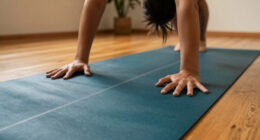
Imagine you’re following a short video at home. If you want a simple check that your hands are evenly placed in Downward-Facing Dog, a few clear markers may be enough. If your eyes keep jumping from your instructor’s screen to a dense grid, the pattern may be doing more to distract you than to help.
Try viewing product photos at full size, and look for guides that stand out enough to see but don’t dominate the mat. Color contrast, lighting, and the way you position your mat in a room can affect visibility. A subtle, tone-on-tone design may feel clean, while brighter lines can be easier to spot at a glance.
These are practical choices rather than signs of a better or worse practice. Choose the design you can understand quickly, then give yourself permission to ignore a line whenever your pose calls for a different setup.
Use the marks as a starting point, then adjust for your body
To use alignment marks well, start with their suggested position, check how your body responds, and adjust until the pose feels steady and comfortable. Lines can help you recreate a setup, but they aren’t universal measurements. Body proportions, mobility, and pose variations differ, so a hand or foot placement that suits one person may not suit you.
- Begin with a guide. For a familiar pose, place your hands or feet near the marks and notice how the setup feels.
- Check your comfort. Pay attention to your joints and balance rather than trying to match every printed angle.
- Adjust as needed. Widen or shorten your stance, or move a hand, if that makes the pose feel more manageable.
- Repeat with curiosity. If you practice both sides, notice what changes. Keep a position that works for you, even if it doesn’t mirror the lines perfectly.
For example, a newer practitioner might place both hands on the printed markers in Downward-Facing Dog and feel an uncomfortable pull. Moving the hands a little wider may make the pose feel more settled. That small change doesn’t mean the mat failed; it means the marks gave you a starting place to explore.
Alignment guides can’t tell you whether a movement is appropriate for a particular body or whether you’re comfortable in a pose. Stop or modify a movement that causes pain. If you have a health condition, an injury, or uncertainty about a pose, ask a qualified yoga teacher or healthcare professional for advice suited to you.
Compare grip, cushioning, and size before paying extra
When you shop for yoga mats with alignment guides, judge the whole mat, not just its printed pattern. Materials such as PVC, natural rubber, and thermoplastic elastomer (TPE) can feel different under your hands, and grip may shift with sweat, cleaning, and wear. The guide design doesn’t tell you how secure the surface will feel.
Picture a warm room where your palms get damp during a flow. A textured mat or a yoga towel might suit you better than a smooth surface, even if the smooth mat has a beautifully clear grid. On the other hand, in a gentle session on a dry floor, you may care more about how the mat cushions your knees than how it handles sweat.
- Grip: Look for surface texture and reviews that describe how the mat feels during sweaty practice.
- Cushioning: More thickness can feel kinder under your knees; a thinner mat can feel steadier in balance poses.
- Dimensions: Extra length or width gives you room to move, but can make the mat heavier to carry.
- Materials and care: Check the listed material, cleaning instructions, and any latex information if you have a sensitivity.
- Price: Pay more for features you’ll use, not simply for a larger number of lines.
Claims like “eco-friendly” vary, so look for specific material details instead of relying on a broad label. Designs have paired alignment guides with different textures, sizes, and materials, but a newer feature or prominent marking doesn’t guarantee better performance. Compare the details that match your routine, including how you’ll carry, clean, and store the mat.
Keep your markings clear with simple, maker-approved care
To keep an alignment mat in good condition, follow the manufacturer’s care instructions and use products the maker recommends. Markings can be printed, etched, or applied another way, so their durability depends on the mat’s construction and how you care for it. Don’t assume every design will handle the same cleaner or amount of water.
After a short session, you might wipe the mat with the cleaner listed in its instructions and let it dry fully before rolling it up. That simple routine can help you avoid packing away a damp surface. If you’re tempted to soak a dirty mat or use a strong household cleaner, check the care guidance first; harsh products or excess water may damage some materials or markings.
The lines themselves don’t determine grip. Material, surface texture, moisture, and wear play a bigger part in how steady the mat feels. If your hands start to slide, stop and check the surface rather than pressing ahead because a marker tells you where to plant them. You may need to clean the mat according to its instructions, use a suitable towel, or replace a worn mat.
Before buying, check whether the product description explains how the guides are applied and how to care for the surface. If the information is missing, treat durability as an open question and read reviews with care. A photo can show a bright white line; it can’t show how that mark will look after months of regular use.
Decide whether alignment lines fit the way you practice
Alignment guides are most useful when you want a quick visual reference during solo practice and least useful when you’d rather move without looking down. They can help a beginner orient their hands in a familiar pose or help a regular practitioner repeat a starting setup. They don’t provide individualized instruction, and they won’t suit every body or teaching style.
Consider two people starting a morning practice. One follows short videos at home and often wonders whether she has stepped too close to the top edge. A centerline and a few crosswise marks could help her reset between sides. The other practices a loose, flowing sequence and prefers to look at the instructor, not the floor. A plain mat may feel calmer.
Paying extra makes sense when you’ll use the markings and the mat also fits your needs for grip, cushioning, size, and care. If the guides are the only selling point and you know you prefer a blank surface, that extra cost may not earn its place in your routine. Check independent reviews for specific notes about wear and grip instead of assuming a striking design performs better.
Try a simple test if you can: stand or kneel on the mat, look at the guide pattern, and imagine setting up a pose you practice often. Does it make the start clearer, or do you find yourself trying to match it? That quick check can tell you more about fit than a long list of fashionable features.
Keep three useful facts in mind when choosing your mat
The most useful facts about alignment mats are straightforward: the lines are references, their usefulness depends on your practice, and the mat’s material and surface affect comfort and grip. Keeping these points together can help you avoid buying a guide pattern that looks impressive but doesn’t support your everyday routine.
First, alignment guides can help with orientation and repeatable setup. If your hands land unevenly in Downward-Facing Dog, a centerline or hand markers may give you something visible to check. Second, there is no single set of marks that fits every body or variation. A person with shorter legs, a wider stance, or a different teaching style may need to move away from the printed suggestion.
Third, grip, thickness, and size matter even when the markings look perfect. Imagine a mat that gives you a clear target for your feet but feels too slippery when your palms get damp. Its lines may help you set up, but they don’t solve the surface problem. Think of the pattern like a road marking: handy for direction, but no substitute for paying attention to the ground beneath you.
Choose the mat that supports a comfortable, adaptable practice. If a few lines help you settle into a pose, use them. If they stop being helpful, look away. Your practice doesn’t need to fit the pattern to make sense.
Frequently Asked Questions
Do alignment lines actually improve yoga practice?
They can help you get oriented and repeat a starting position, especially during solo practice. They don’t replace instruction or individualized feedback, and they can’t tell you whether a pose feels right for your body.
Are yoga mats with alignment lines suitable for beginners?
They can offer a helpful visual reference when you’re learning familiar poses at home. Treat each mark as a suggestion and adjust your stance or hand position if the pose feels uncomfortable.
Can alignment lines prevent injury?
No. Lines can show where you placed a hand or foot, but they can’t assess whether a movement is safe or comfortable for you. Stop or modify a pose that causes pain, and seek qualified guidance when appropriate.
Are yoga mats with alignment lines slippery?
The markings alone don’t determine grip. Material, surface texture, moisture, and wear matter more, so check product details and reviews; a suitable towel may also help during sweaty practice.
How do I clean an alignment mat?
Follow the manufacturer’s care instructions because cleaners and soaking can affect different materials and markings. Let the mat dry fully before storing it if the instructions allow wiping or damp cleaning.
Are alignment lines permanent, and are they worth paying extra for?
Some guides are printed, etched, or applied another way, so durability depends on the mat’s construction and care. Extra cost may be worthwhile if you value a visual reference and the mat also suits your needs for grip, cushioning, size, and cleaning.
Conclusion
Choose an alignment mat for the way it feels under your hands and knees, then decide whether its markings make your practice easier to set up. A centerline can help you find your place, but it can’t tell you what feels right in your body. Let the marks offer a quiet cue, and let comfort guide your next step.
The mat can show you where you are. You still get to decide where your practice goes.