
TL;DR

Get workout gear delivered free with Prime
- Fast, free delivery on millions of items
- Prime Video, Amazon Music and more included
- Member-only deals all year
A Fit&Well writer tested carrying two 10kg dumbbells between rooms whenever moving around her home for two weeks. She reported greater posture awareness, easier-feeling grip tasks and a side-plank time that rose from 1 minute 33 seconds to 1 minute 48 seconds, but the personal experiment cannot establish that the carries caused those changes.
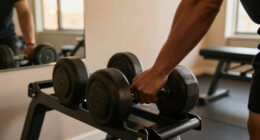
A Fit&Well writer reported that carrying two 22lb (10kg) dumbbells between rooms whenever she moved around her home for two weeks coincided with changes in her posture awareness, grip and side-plank performance. The account describes a personal fitness experiment, not a controlled study, so it does not establish that the carries caused the reported results.
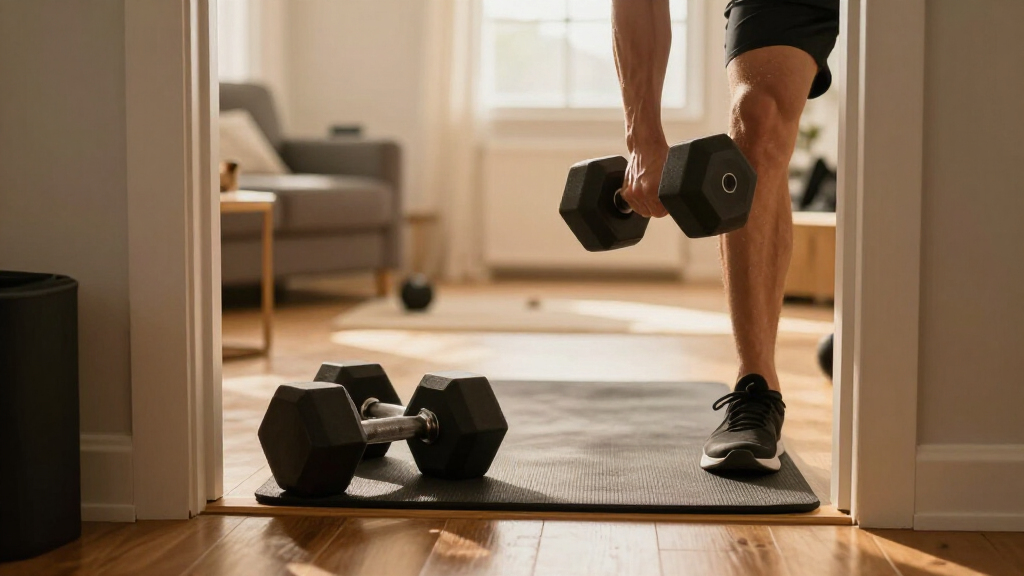
The writer adapted an idea shared on Instagram by personal trainer Kate Rowe-Ham, who suggested leaving weights near a staircase and carrying them upstairs on a trip, then taking them back down later. Rowe-Ham credited nutrition consultant Laurel Seabrook with a similar approach using a 25lb kettlebell. The writer said she rarely used the stairs while working, so she instead carried dumbbells between her kitchen desk and living room.
For two weeks, she took the weights along whenever a task sent her from one room to the other, then carried them back on a later trip. She said the repeated walks gave her a reason to stand up and take breaks from sitting. By the end, she felt more aware of her posture and said her neck felt less stiff, while cautioning that she could not attribute those feelings to the carries alone.
She also reported that the dumbbells felt easier to hold by the end of the first week and that grip-demanding exercises, including wood chops, felt easier during the second. Her timed side plank increased by 15 seconds, from 1 minute 33 seconds on the first day to 1 minute 48 seconds after two weeks. The article provides no independent measurement or control condition for these observations.
A Small Addition to Desk Days
The report offers one example of how a person tried to build brief movement breaks into a day spent working at home without scheduling a separate workout. Carrying an object between rooms paired an existing routine—moving around the home—with a short bout of loaded walking. That may appeal to readers looking for manageable ways to interrupt long periods at a desk, though this account does not show how much activity it added or whether others would have similar results.
The measured plank change is a personal before-and-after comparison, not evidence of a general training effect. Performance can vary with effort, technique, fatigue and testing conditions. The writer herself said she could not determine how much of the 15-second difference came from carrying the weights. The distinction matters: the story can describe what one person noticed, but it cannot establish that this practice reduces neck stiffness, improves grip or increases core endurance for readers generally.
There is also a practical safety point. Carrying dumbbells while walking creates a load to manage, and repeated trips through a home may involve stairs, pets, obstacles or slippery floors. Readers who try a similar habit should select a manageable weight, keep their path clear and avoid carrying weights if doing so feels unsafe or causes pain. Anyone with a relevant health condition or mobility concern can seek guidance from a qualified professional before adding loaded carries.
Products Worth Considering

BowFlex Results Series SelectTech Dumbbells

Bowflex SelectTech 840 Adjustable Kettlebell

Oral-B iO Series 9 Limited Rechargeable Electric Toothbrush with 7 Cleaning Modes
As an affiliate, we earn on qualifying purchases.
From Stair Carries to Room-to-Room Trips
The starting idea, as described in Fit&Well, was to leave weights at the bottom of a staircase and carry them upstairs during ordinary trips. The trainer credited the concept to Seabrook, who reportedly used a 25lb kettlebell. The point was to fold short carries into daily movement rather than set aside a dedicated workout session.
The writer changed the setup to fit her home and work routine: she used two 10kg dumbbells and carried them between her kitchen workspace and living room. She presented the activity as a series of farmer’s carries, a walking exercise in which weights are held at the sides. She said she might continue and try single-arm carries, but the source gives no follow-up results or training plan.
“I can’t say the carries alone were responsible, but the short breaks from sitting felt good and made me more conscious of my posture.”
— Fit&Well writer
What the Personal Test Cannot Show
The report does not provide the experiment’s publication date, the number of carries completed each day, or details such as walking distance, rest periods and how consistently the routine was followed. It also does not say whether the same person repeated the plank test under matching conditions. Those gaps make it difficult to compare the observations or judge how much exercise the routine represented.
Most importantly, there was no control group and no way to separate the effect of carrying weights from other factors, including taking breaks, changes in other exercise, day-to-day variation or test familiarity. The article records the writer’s experience, not a clinical assessment or a study of health outcomes. It remains unclear whether the reported changes persisted after the two-week period.
Whether the Habit Continues
The writer said she intended to keep carrying weights between rooms and might add single-arm carries. The source material does not give a date for a follow-up, additional measurements or evidence that she completed that next step.
For now, the development is limited to the published personal account. Any further conclusions would require more information, such as a longer tracking period and consistently performed measures. Readers considering the idea can start with a light, manageable load and a clear walking route; the report does not prescribe a specific weight, number of trips or routine.
Key Questions
What did the Fit&Well writer try?
For two weeks, she carried two 22lb (10kg) dumbbells between her kitchen desk and living room whenever she had a reason to move between the rooms.
What changes did she report?
She described greater awareness of her posture, less neck stiffness, grip tasks that felt easier and a side-plank time that increased from 1:33 to 1:48. These are her observations, not established effects of the routine.
Does the experiment prove that carrying dumbbells improves posture or strength?
No. It was a single-person account without a control group. The writer said she could not determine whether the carries alone caused the changes she noticed.
What weights and exercises were involved?
The writer carried two 22lb (10kg) dumbbells on room-to-room trips. She also compared her side-plank time before and after the experiment and mentioned wood chops as an exercise where grip usually tires first.
Is it safe to try carrying weights around the home?
Safety depends on the person, load and surroundings. Use a manageable weight, keep the route clear and do not carry weights if it feels unsafe or painful. People with pre-existing conditions or mobility concerns should seek professional guidance.
Source: rss