
TL;DR

Get workout gear delivered free with Prime
- Fast, free delivery on millions of items
- Prime Video, Amazon Music and more included
- Member-only deals all year
Physical therapist Raj Suppiah recommends cat-cow, open-book thoracic rotations and a half-kneeling hip flexor stretch for people who feel stiff after sitting for long periods. The Fit&Well report presents them as mobility exercises, not a treatment for an underlying condition, and advises stopping if pain worsens.
A Fit&Well report outlines three stretches recommended by physical therapist Raj Suppiah for people who feel stiff after sitting for much of the day: cat-cow, open-book thoracic rotation and a half-kneeling hip flexor stretch. The routine focuses on comfortable movement through the spine and hips; it is not presented as a diagnosis or a guaranteed way to relieve back pain.
Suppiah, co-founder of Foundation Physiotherapy & Wellness, recommends completing 10–12 cat-cow repetitions, followed by 10–12 open-book rotations on each side. Finish by holding the half-kneeling hip flexor stretch for 20–30 seconds per side. Rest for 15–30 seconds, then repeat the sequence once, according to the report.
For cat-cow, begin on hands and knees, with hands beneath the shoulders and knees beneath the hips. Slowly round the back toward the ceiling, then gently lower the belly and lift the chest, moving between the two positions within a comfortable range. Suppiah says the movement takes the spine through different positions after it has remained relatively still during sitting.
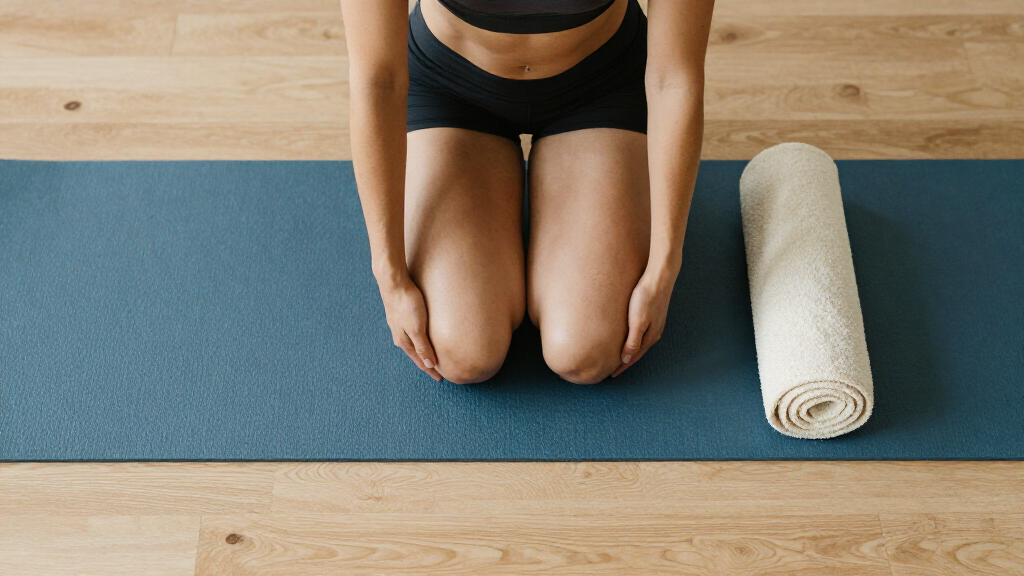
For the open book, lie on one side with hips and knees bent, arms extended in front and palms together. Sweep the upper arm across the body as the chest rotates, keeping the knees together; the hand does not need to touch the floor. For the final stretch, kneel on one knee with the other foot planted in front. Keep the torso upright, gently tuck the pelvis and shift the hips forward until a stretch is felt at the front of the kneeling-side hip. A cushion can support the knee.
A Short Routine for Stiffness
The recommendations offer a brief movement break for people whose work or other routines keep them seated. They also emphasize that back comfort can involve more than the back itself: the routine includes spinal movement and hip mobility, which Suppiah says contribute to everyday actions such as standing, walking, reaching and turning.
Suppiah advises changing positions regularly rather than trying to hold one supposedly perfect posture throughout the day. That is a practical distinction: the report does not say sitting inevitably damages the spine, nor that these stretches prevent or cure back problems. They are presented as gentle ways to move after staying in one position.
The source also notes that mobility is only one part of maintaining a comfortable, capable back. Suppiah says strength and endurance matter too, although the supplied report excerpt does not provide a detailed strength program. Readers should not treat the three-move sequence as a substitute for individualized advice when pain is persistent or affects daily activities.
Products Worth Considering

Theragun Relief Special Edition Bundle

Garmin Forerunner 165 GPS Running Smartwatch, 43 mm, Black

Fitbit Versa 2 Health and Fitness Smartwatch with Heart Rate, Alexa, Music, Sleep and Swim Tracking
As an affiliate, we earn on qualifying purchases.
Why Sitting Can Feel Uncomfortable
The report began with its writer describing temporary stiffness after working at a dining table rather than a usual workstation. In response, the writer asked Suppiah for stretches intended to give the back a break and support mobility. The source does not describe a clinical study or a new treatment; it is practical exercise guidance attributed to a physical therapist.
Suppiah says that sitting keeps the body in relatively static positions. Muscles may work continuously to support the sitting position and become tired, while joints move less. An ill-fitting chair or a desk that prompts someone to lean forward may add discomfort. He cautions, however, that sitting itself is not inherently damaging and that research does not establish one sitting posture as a cause of back pain for everyone.
His broader advice is to vary positions through the day instead of trying to maintain one posture for hours. The exercises in the report reflect that approach by encouraging gentle movement in spinal bending, rotation and hip extension.
“Our bodies are designed to move, not to hold one position perfectly for eight hours.”
— Raj Suppiah, co-founder of Foundation Physiotherapy & Wellness
Limits of the Exercise Advice
The supplied report does not provide clinical trial results, evidence comparing these stretches with other approaches, or a publication date. It also does not claim that the routine works for everyone or identify the cause of any individual reader’s back discomfort. The amount of relief a person may feel, and how often the sequence should be repeated beyond the suggested second round, are not specified.
The advice is to move gently and stop if an exercise makes pain worse. The source says people should seek advice from a healthcare professional if back pain persists for a few weeks or interferes with everyday activities. It does not offer guidance for particular diagnoses or symptoms, so people with existing health concerns may need personalized direction before trying the movements.
How Readers Can Use the Routine
Readers who choose to try the sequence can follow the report’s stated counts, use support such as a cushion under the kneeling knee, and keep each movement within a comfortable range. The routine can be used as a prompt to break up prolonged sitting, alongside changing position during the day; the source does not prescribe a fixed schedule for those breaks.
Monitor how the movements feel rather than pushing to achieve a particular range or forcing the hand to the floor during the open book. Stop if symptoms worsen. If discomfort continues for several weeks or disrupts ordinary activities, the report recommends consulting a healthcare professional for advice suited to the individual.
Key Questions
Which three moves does the report recommend?
Physical therapist Raj Suppiah recommends cat-cow, the open-book thoracic rotation and a half-kneeling hip flexor stretch.
How many repetitions and how long should each stretch take?
The suggested sequence is 10–12 cat-cow repetitions, then 10–12 open-book rotations per side, followed by a 20–30-second hip flexor stretch on each side. Rest for 15–30 seconds and repeat the sequence once.
Should the movements hurt?
The report says to move gently within a comfortable range and stop if an exercise makes pain worse. It does not claim that discomfort should be pushed through.
When should someone seek professional advice?
According to the report, seek advice from a healthcare professional if back pain persists for a few weeks or interferes with everyday activities. The guidance does not assess the cause of an individual’s symptoms.
Source: fitandwell.com