
TL;DR

Get workout gear delivered free with Prime
- Fast, free delivery on millions of items
- Prime Video, Amazon Music and more included
- Member-only deals all year
As daylight hours shorten and clocks shift to standard time, seasonal affective disorder can return for people who experience fall and winter depression. No single cause has been identified, but research points to differences in sensitivity to blue light; clinicians cite light therapy, medication and cognitive behavioral therapy as treatment options.
Shorter daylight hours and the return to standard time may worsen fall and winter depression for people prone to seasonal affective disorder (SAD), according to a MedPage Today report published Nov. 4. Researchers have not identified one cause for the condition, but studies are examining how the eyes respond to light and how those signals may influence mood and alertness.
SAD involves depressive episodes that typically begin in fall and ease in spring or summer. The report says millions of people are estimated to have the disorder. A less severe form, called subsyndromal SAD, is also recognized by medical experts; seasonal depression can occur in summer as well, though the report says less is known about that pattern. Symptoms may resemble depression and include persistent hopelessness or pessimism, as well as difficulty concentrating, remembering or making decisions.
Researcher Kathryn Roecklein, PhD, of the University of Pittsburgh studied how people with and without SAD reacted to blue light. The report says the SAD group was, on average, less sensitive to blue light, particularly during winter. Sunlight contains blue wavelengths, and specialized cells in the eyes convert light into neural signals that affect alertness. The findings point to a possible mechanism; they do not establish a single cause of SAD.
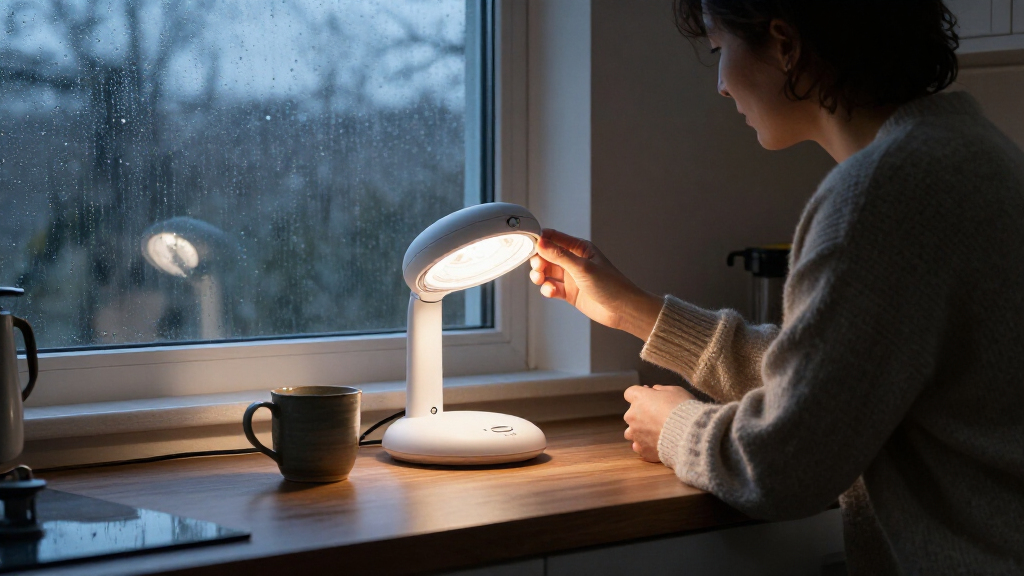
Light therapy is one treatment that can help many people with SAD, according to Paul Desan, MD, PhD, of Yale University’s Winter Depression Research Clinic. Research supports using a device delivering about 10,000 lux for 30 minutes each morning, the report says. Antidepressant medication is also a first-line treatment, while clinicians may recommend regular sleep schedules and outdoor walks. Cognitive behavioral therapy (CBT) has shown more durable effects in studies, Kelly Rohan, PhD, of the University of Vermont told MedPage Today.
How Reduced Daylight Affects Treatment
The seasonal pattern can affect mood, concentration and daily functioning, making it useful for people to recognize recurring symptoms and discuss them with a health professional. The time change coincides with darker afternoons, but the report describes it as one trigger among changes in daylight—not a proven cause on its own.
Treatment choices differ in cost and duration. Light devices cited in the report range from $50 to more than $400, and some products marketed for SAD may not be bright enough to match research-supported use. Light therapy’s benefits can fade after people stop using it, while CBT may offer more lasting effects, according to Rohan. These differences can inform discussions with clinicians about which approach fits an individual’s symptoms and circumstances.
Products Worth Considering

Bowflex SelectTech 840 Adjustable Kettlebell

BowFlex Results Series SelectTech Adjustable Dumbbells (Pair)

Hyperice Hypervolt Go 3 Portable Percussion Massage Gun with Carry Case
As an affiliate, we earn on qualifying purchases.
What Researchers Know About SAD
Norman Rosenthal, MD, then a researcher at the National Institutes of Health, and colleagues described SAD and coined the term in 1984. The condition has since been recognized as a seasonal pattern of depression, but its biological causes remain under study. The NIH says SAD affects more women than men; the source report does not provide a specific prevalence figure or explain the reasons for that difference.
The blue-light research offers one avenue of investigation. If people with SAD respond differently to light, that could help explain how seasonal changes affect some people more than others. The report presents the study finding as a possible explanation, not proof that reduced blue-light sensitivity accounts for every case.
For treatment, the report says Yale has tested light products and provides recommendations, while the nonprofit Center for Environmental Therapeutics publishes a consumer guide. People diagnosed with SAD can ask their insurer whether a light device may be covered. The report also notes that clinicians recommend planning manageable, enjoyable activities and social contact, such as meeting a friend for coffee.
“I believe that because it is easy to remember, the acronym has stuck.”
— Norman Rosenthal, MD, who helped describe SAD in 1984
What Causes Remains Unsettled
No single cause of SAD has been identified. The blue-light findings suggest one possible explanation, but the report does not establish that lower sensitivity causes seasonal depression or explain how much it contributes. It also does not give a precise estimate of how many people are affected, or detailed findings about the summer form of seasonal depression.
The report does not specify which individual will benefit from each treatment or provide guidance for choosing a light device based on personal medical circumstances. People considering light therapy or changes to medication should discuss options with a clinician, particularly if they have other health conditions. The material describes treatment approaches but does not report a new clinical guideline or a newly published trial.
What Patients Can Discuss With Clinicians
As shorter days continue, people who notice recurring fall or winter symptoms can track when they begin and how they affect daily life, then raise the pattern with a health professional. Clinicians can assess whether symptoms fit SAD and discuss light therapy, medication or CBT, along with regular sleep and outdoor activity.
Anyone considering a light device can compare its specifications with the report’s cited research level of about 10,000 lux for 30 minutes each morning, consult a clinician, and check the Yale or Center for Environmental Therapeutics product guidance. Insurance coverage may vary. The report identifies no scheduled next research milestone, so the causes of SAD and the role of light sensitivity remain subjects for ongoing study.
Key Questions
What is seasonal affective disorder?
SAD is a pattern of depressive episodes that typically begin in fall and ease in spring or summer. Symptoms can include persistent hopelessness or pessimism and difficulty concentrating, remembering or making decisions.
Does the time change cause SAD?
The report describes the return to standard time and darker afternoons as a possible trigger for people prone to seasonal depression. It does not establish the clock change as the sole cause; no single cause of SAD has been identified.
What light therapy dose does the report describe?
The report says research supports a light of about 10,000 lux for 30 minutes each morning. Talk with a health professional about whether it is appropriate, and check device specifications because some products marketed for SAD may be too dim.
What other treatments may help?
The report lists antidepressant medication and CBT alongside light therapy. Clinicians may also recommend a regular sleep schedule, outdoor walks and planning manageable, enjoyable activities. A clinician can discuss options based on individual needs.
Source: medpagetoday.com