
TL;DR

Get workout gear delivered free with Prime
- Fast, free delivery on millions of items
- Prime Video, Amazon Music and more included
- Member-only deals all year
Fit&Well published a five-minute evening Tai Chi routine recommended by teacher Brian Thompson, with breathing, gentle movements and self-massage. Thompson says it can help release tension and settle the body before bed, but the report does not provide clinical evidence that the sequence improves sleep or treats insomnia.
Fit&Well has published a five-minute evening Tai Chi routine recommended by teacher Brian Thompson, who says its slow movements and breathing can help people unwind before bed. The sequence offers a short, low-impact option for easing into a nighttime routine, though the report does not establish that it improves sleep or treats insomnia.
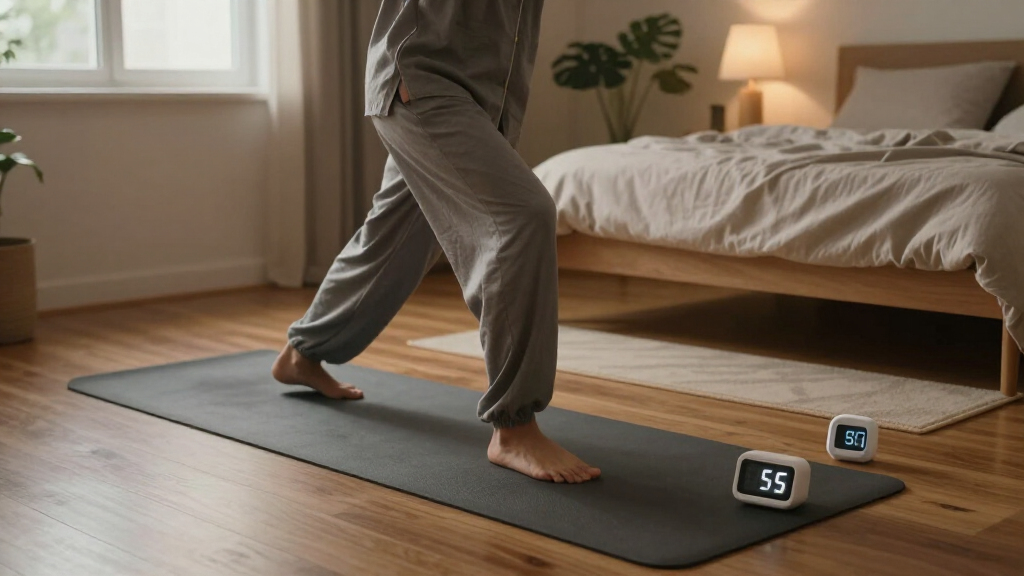
The routine moves through four stages: seated breathing, a standing arm lift, silk-reeling movements that coordinate the hands and weight shifts, and a brief self-massage. It is intended to take about five minutes and can be done beside the bed, with some movements performed seated and others standing.
For the opening, sit upright on a sturdy chair with feet flat on the floor and breathe naturally through the nose, allowing the shoulders, chest and stomach to soften. In the next movement, stand with feet about shoulder-width apart and knees relaxed; raise the arms gently to shoulder height while inhaling, then lower them as you return to the starting position. The sequence suggests repeating this lift two or three times.
The silk-reeling section uses slow turns of the waist, relaxed arm circles and shifts of weight from one leg to the other. The instructions advise beginning on one side, then switching, and coordinating movement with breathing. The final step is to massage areas such as the neck, arms, torso and legs, followed by gentle cupping or patting with the hands. The source presents these as instructions in a suggested routine, not as a tested treatment protocol.
A Short Wind-Down Before Bed
A brief, gentle sequence may appeal to people who want a structured way to slow down at the end of the day without a strenuous workout or equipment. Its emphasis on steady breathing and unhurried movement provides a simple routine that can be adapted to a small space, including a bedroom.
The practical value should be kept distinct from a medical claim. Thompson describes possible relaxation effects, but the Fit&Well report does not cite a clinical trial or quantify changes in sleep. Readers should treat the practice as an optional part of winding down, not a proven remedy for insomnia or a substitute for professional advice about persistent sleep problems.
Products Worth Considering

Therabody Theragun Mini 3rd Generation Massage Gun, Black

Therabody Theragun Relief Massage Gun, 3-Speed, Black

Therabody Theragun Prime 6th Generation Deep Tissue Massage Gun, Navy
As an affiliate, we earn on qualifying purchases.
How the Evening Sequence Works
Tai Chi is described in the report as an ancient Chinese practice combining gentle, low-impact movement with breathing and attention to the body. The routine presented by Fit&Well is specifically framed for evening use, although the report says Tai Chi can be practiced at other times of day.
Thompson, identified as the founder of BNEW4LIFE, recommends the sequence as a way to close out the day. His explanation focuses on accumulated tension and calming down before bed; the article does not provide additional research or independent expert assessment of those proposed effects.
“The benefit of an evening Tai Chi practice is that it helps to unwind accumulated physical tension in the back, neck and shoulders from the day.”
— Brian Thompson, Tai Chi teacher and founder of BNEW4LIFE, as quoted by Fit&Well
Sleep Benefits Remain Unverified
The source does not report a study testing this specific five-minute sequence, nor does it give measured sleep outcomes, a comparison group or evidence that it helps people with a sleep disorder. The suggested benefits are attributed to Thompson, and it is not clear how consistently people would experience them.
The article also does not specify whether the routine is suitable for every person or offer modifications for mobility limitations. Anyone who finds standing, bending or weight-shifting uncomfortable can stop or adapt the movements; people with health concerns can seek guidance from a qualified professional.
Try the Routine at Your Own Pace
The published instructions invite readers to try the sequence slowly, match movement to comfortable breathing and use a stable chair for the seated opening. There is no announced follow-up study or clinical evaluation in the source material, so any sleep effect remains a personal experience rather than a confirmed outcome.
People whose sleep difficulties are persistent or affecting daily life should consider speaking with a healthcare professional rather than relying on a relaxation routine alone. For those who choose to try it, the next step is simply to see whether the gentle movements feel comfortable and fit their usual bedtime habits.
Key Questions
What does the five-minute Tai Chi routine include?
It includes seated breathing, gentle arm lifts, slow silk-reeling movements with weight shifts, and a short self-massage with light patting.
Is the routine proven to improve sleep?
The Fit&Well report does not cite research testing this routine or establish that it improves sleep. The proposed benefits are Thompson’s recommendations and explanation, not confirmed clinical results.
Can the movements be done near the bed?
Yes. The instructions say the massage can be done standing or sitting beside the bed. The sequence also begins in a sturdy chair; use a stable setup and stop if a movement causes discomfort.
Should this replace help for ongoing sleep problems?
No. The routine is presented as a possible way to unwind, not as treatment for insomnia. People with persistent sleep difficulties should consider discussing them with a healthcare professional.
Source: rss