TL;DR

Get workout gear delivered free with Prime
- Fast, free delivery on millions of items
- Prime Video, Amazon Music and more included
- Member-only deals all year
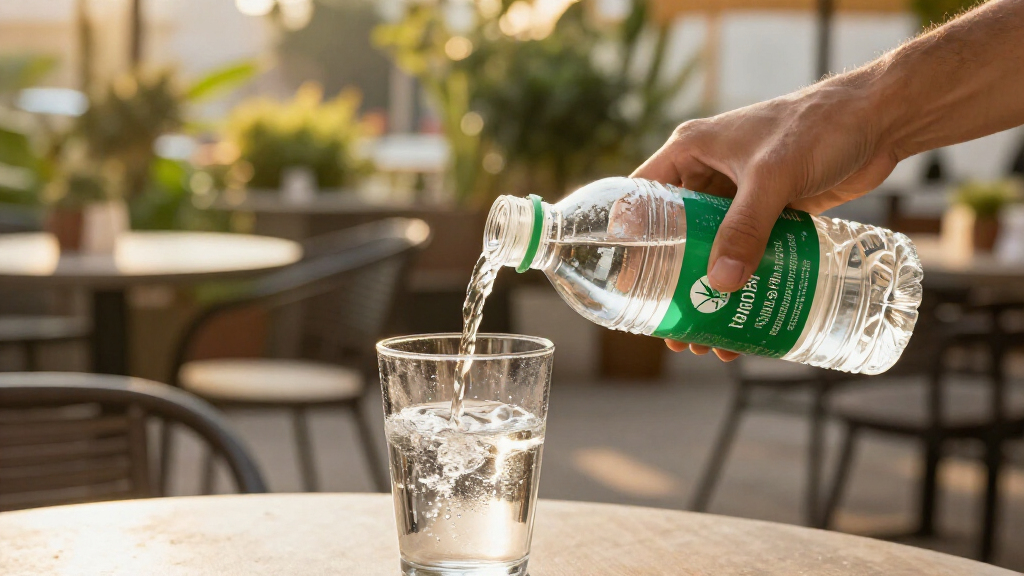
New Zealand-founded water brand Anew is expanding in the United States with American-sourced spring water, U.S. bottle manufacturing and distribution aimed at retail, hospitality, wellness and fitness businesses. Its published tests report no microplastics in one submitted water sample, no detections among 14 PFAS compounds tested, and no BPA or BPS in the bottle bodies examined; those findings apply only to the samples and substances analyzed.
New Zealand-founded water brand Anew is expanding in the United States with American-sourced spring water, domestic manufacturing of its reusable, plant-based bottles and distribution efforts across retail, hospitality, wellness and fitness. The company is also using published laboratory tests as part of its pitch, including a result showing no microplastics in one submitted water sample within the method’s detection limits.
Anew says its American spring water comes from a protected underground artesian aquifer and is bottled without reverse osmosis or artificial remineralization. The company describes its bottle and cap as plant-based, lightweight and dishwasher-safe for repeated refilling. It says U.S. bottle manufacturing began in October 2026, as it seeks to grow distribution in the domestic market.
The microplastics test was conducted on a bottle filled in New Zealand that, according to Anew, traveled by sea to Los Angeles without climate control, was trucked to Las Vegas and remained in storage for 2.5 months before being sent to EMSL Analytical. The company said it chose the journey to represent conditions a bottle could encounter before purchase. EMSL’s report, dated May 5, 2025, found no microplastics in the single submitted sample within the test’s detection limits. The analysis used microscopy and Fourier transform infrared spectroscopy and referenced ISO 24187:2023 and other analytical guidance.
Anew also publishes a water-testing report that found no detections among 14 PFAS compounds tested using EPA Method 537.1. A company-prepared summary of SGS testing reports no BPA or BPS detected in the bottle bodies tested. These results concern the particular samples and substances examined; they do not establish that every bottle or water sample will produce the same result.
Testing Shapes Anew’s Wellness Pitch
Anew is entering a market where consumers and businesses may weigh a product’s packaging and testing disclosures alongside its source and taste. The company is making both the reusable bottle design and access to testing documents part of its sales message, while targeting outlets such as fitness studios, hotels and specialty retailers.
The published results provide evidence about specific samples, but their scope matters. A single microplastics sample is not a survey of all Anew water or production runs, and the tests do not establish that the product is free of every potentially relevant contaminant. For customers and potential stockists, the reports offer information to evaluate, not a blanket guarantee about all bottles or future batches.
The expansion also brings production closer to the U.S. market, according to the company. Domestic manufacturing could support its effort to serve U.S. retail and hospitality accounts, though Anew has not supplied figures in the source report on production volume, sales, or the rollout’s reach.
Products Worth Considering

Bowflex SelectTech 840 Adjustable Kettlebell

BowFlex Results Series SelectTech Adjustable Dumbbells, Pair

Garmin Forerunner 265S 42 mm GPS Running Watch, Light Pink and Powder Gray
As an affiliate, we earn on qualifying purchases.
How the Testing Fits the Rollout
Anew’s testing disclosure comes amid wider attention to plastic particles in drinking water. A 2024 study published in Proceedings of the National Academy of Sciences reported an average of approximately 240,000 plastic particles per liter across samples from three bottled-water brands. About 90% were nanoplastics, which were detected using a different analytical technique. Those findings are not directly comparable with Anew’s microplastics test, and that test does not establish the absence of nanoplastics.
In April 2026, the U.S. Environmental Protection Agency included microplastics in its draft Sixth Contaminant Candidate List, a list of contaminants for consideration in future drinking-water regulatory decisions. Inclusion on the draft list does not create a federal drinking-water limit. The regulatory step is context for public interest in the subject, not an endorsement or assessment of Anew’s product.
The company lists Bristol Farms, Lassens, HUME, Pop Up Grocer and The Shelf among its stockists, as well as select hotels and Pilates studios. Its products are also available through its U.S. website. The source report does not specify how many locations carry the products or how broad the current distribution is.
Limits of the Published Test Results
The microplastics result covers one submitted sample and is limited by the detection capabilities of the method used. It does not show how results might vary among production batches, sources or storage conditions, and it does not rule out nanoplastics. The source material does not provide the method’s numerical detection limit.
The PFAS findings apply to 14 named compounds analyzed in the reported test, while the BPA and BPS statement is based on a company-prepared summary of testing on bottle bodies. The available material does not establish results for other compounds, every packaging component or all future products. It also does not provide detailed information about the number of bottle bodies tested.
Anew’s claims about the plant-based bottle and cap, the spring-water source and manufacturing are company descriptions. The source report does not include independent verification of those claims, production capacity, U.S. sales figures, or a timetable for broader distribution.
U.S. Distribution and Production
Anew says it is pursuing U.S. distribution through retail, hospitality, wellness and fitness businesses, with products already listed at several named stockists and on its website. The company’s next visible steps are likely to be the continued rollout of its American spring water and domestically manufactured bottles, though the source material gives no specific expansion timetable.
Further updates that could clarify the scale of the launch include the number of retail and hospitality locations carrying the product, U.S. production volumes, and whether Anew publishes additional test results covering more samples or production batches. No new testing schedule or regulatory decision concerning the product is specified in the report.
Key Questions
What is Anew announcing in the United States?
Anew is expanding with American-sourced spring water, U.S. bottle manufacturing and a push into retail, hospitality, wellness and fitness distribution. The company says domestic bottle manufacturing began in October 2026.
What did the microplastics test find?
EMSL Analytical’s May 5, 2025 report found no microplastics in one submitted sample within the method’s detection limits. That result does not establish that all Anew water is free of microplastics or nanoplastics.
What do the PFAS and packaging results cover?
Anew’s published water report records no detections among 14 PFAS compounds analyzed using EPA Method 537.1. A company-prepared summary of SGS testing reports no BPA or BPS detected in the bottle bodies tested. The findings apply to the specific substances and samples examined.
Where can customers find Anew products?
Anew lists Bristol Farms, Lassens, HUME, Pop Up Grocer and The Shelf among its stockists, along with select hotels and Pilates studios. The company also sells through its U.S. website; the source report does not give a count of locations.
Source: athletechnews.com