

TL;DR

Get workout gear delivered free with Prime
- Fast, free delivery on millions of items
- Prime Video, Amazon Music and more included
- Member-only deals all year
In the Brazilian OPTIMAL-STROKE trial, patients with a previous ischemic stroke or transient ischemic attack had fewer major cardiovascular events when treated to a systolic blood pressure target below 120 mm Hg rather than below 140 mm Hg. The results also included a potential increase in a composite kidney outcome, mainly a sustained decline in kidney function; researchers reported no increase in kidney failure, dialysis, or renal death.
A trial involving 4,368 people with a previous ischemic stroke or transient ischemic attack found fewer major cardiovascular events among those assigned to intensive blood pressure treatment, targeting systolic pressure below 120 mm Hg, than among those assigned a target below 140 mm Hg. Over a median follow-up of roughly four years, events occurred in 10.9% versus 13.5%, respectively, according to results presented at the American Heart Association annual meeting and published in the New England Journal of Medicine.
The trial, called OPTIMAL-STROKE, was conducted at 30 sites in Brazil. Researchers randomly assigned participants with elevated blood pressure and a prior ischemic stroke or TIA in equal groups to intensive or standard treatment. Investigators adjusted treatment after assignment to pursue the respective systolic blood pressure targets. The reported difference in the main cardiovascular outcome was statistically significant (P=0.007).
The primary outcome combined major adverse cardiovascular events. The report describes a potential increase in a composite kidney outcome with intensive treatment, driven mainly by a sustained decline in kidney function. It reports no increase in the more serious kidney outcomes of renal death, end-stage kidney disease, or need for dialysis. The available report does not provide the full event counts or the kidney outcome’s absolute rates.
The same report covered OPTIMAL-DIABETES, a separate Brazilian trial of people with type 2 diabetes and high cardiovascular risk. In that study, the primary cardiovascular outcome occurred in 6% of the intensive-treatment group and 6.7% of the standard-treatment group; the difference was not statistically significant (P=0.20). The two trials therefore produced different results in different patient populations, rather than establishing one target’s effect for everyone with high blood pressure.
A Lower Target After Stroke
The findings could affect decisions about blood pressure targets for people recovering from ischemic stroke or TIA, a group at risk of another stroke and other cardiovascular events. The result supports testing a systolic target below 120 mm Hg in this specific population, but it does not establish that every stroke survivor should pursue that level. Treatment choices also have to account for kidney-function changes and the practical difficulty of reaching the target.
Cheryl Bushnell, a neurologist at Wake Forest University who commented on the trial, said the results could ease concern among clinicians about lowering pressure in patients with narrowed arteries supplying the brain. However, the trial does not by itself resolve how clinicians should manage individual patients with those conditions. AHA discussant Daichi Shimbo of Columbia University emphasized that reaching below 120 may be difficult outside a trial and questioned how clinicians would weigh the cardiovascular benefit against the kidney signal.
Products Worth Considering

Withings BPM Connect Wi-Fi and Bluetooth Blood Pressure Monitor

Blueair Blue Pure 211i Max Air Purifier for Large Rooms
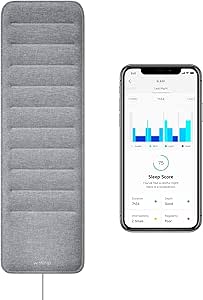
Withings Sleep Under-Mattress Sleep Tracking Pad
As an affiliate, we earn on qualifying purchases.
Two Trials, Different Populations
The comparison in OPTIMAL-STROKE was between a systolic target below 120 mm Hg and a standard target below 140 mm Hg. The report notes that current guidelines recommend a target of 130/80 mm Hg for this population. The trial’s result raises the possibility of a lower target for some patients, but a trial finding is not itself a change to clinical guidelines.
OPTIMAL-DIABETES tested the same target strategy in people with type 2 diabetes and high cardiovascular risk, and its primary result was neutral. Lead investigator Otavio Berwanger said that result should be read alongside earlier trials, including BPROAD in China and ACCORD BP in North America. He cited a prespecified meta-analysis combining the findings with those studies, which showed a 16% relative reduction in major cardiovascular events across the evidence considered. That pooled estimate is not the result of OPTIMAL-DIABETES alone.
“We had one price to pay here that offset the benefits.”
— Otavio Berwanger, lead investigator, speaking at the American Heart Association meeting
Kidney Risk and Clinical Use
The report does not give the absolute rates or full event counts for the kidney outcome, making it difficult to judge its size from the information provided. It characterizes the increase as mainly a sustained decline in kidney function and reports no rise in renal death, end-stage kidney disease, or dialysis. The long-term significance of that decline is not established in the supplied account.
It is also unclear how readily the trial’s blood pressure target can be reached in routine care. Shimbo said a substantial portion of participants assigned intensive treatment did not achieve systolic pressure below 120 mm Hg. The report does not specify the proportion or provide detailed data on treatment adherence, side effects beyond the kidney finding, or which patient characteristics might change the balance of benefits and risks. The results apply to the studied population and do not settle the target for all stroke survivors or people with diabetes.
Guidelines and Practical Targets
Clinicians and guideline groups will need to assess OPTIMAL-STROKE alongside other trials before deciding whether recommendations for people with prior ischemic stroke or TIA should change. If a target below 120 mm Hg is adopted, Shimbo said guidance will be needed on how to reach it in clinical practice. The report does not identify a timetable for any guideline decision.
For now, the study provides evidence for a more intensive target in the trial’s stroke population, alongside a kidney-function signal that clinicians will need to weigh. The diabetes trial’s neutral result on its own, and the reported pooled evidence from multiple trials, remain separate parts of the discussion rather than a single conclusion applying equally to both groups.
Key Questions
What did OPTIMAL-STROKE find?
Among people with a prior ischemic stroke or TIA, major cardiovascular events occurred in 10.9% of participants assigned a systolic target below 120 mm Hg and 13.5% assigned a target below 140 mm Hg over roughly four years of median follow-up.
Does the study mean every stroke survivor should target below 120?
No. The trial studied a defined group of people with elevated blood pressure and previous ischemic stroke or TIA. The result does not establish a target for every stroke survivor, and guidelines have not been reported as changed.
What kidney effects were reported?
Researchers reported a potential increase in a composite kidney outcome, mainly driven by a sustained decline in kidney function. The report said there was no increase in renal death, end-stage kidney disease, or need for dialysis.
Why was the diabetes trial result different?
OPTIMAL-DIABETES studied people with type 2 diabetes and high cardiovascular risk, a different population. Its primary outcome rates were 6% with intensive treatment and 6.7% with standard treatment, a difference that was not statistically significant. The investigator also cited a prespecified meta-analysis combining this trial with earlier studies, which found a 16% relative reduction across the evidence considered.
Source: medpagetoday.com