
TL;DR

Get workout gear delivered free with Prime
- Fast, free delivery on millions of items
- Prime Video, Amazon Music and more included
- Member-only deals all year
A Fit&Well writer said she ran farther before knee pain during a two-week trial of a daily standing stretch, reaching four pain-free miles by the second week. Pain returned at 4.5 miles on her final run, and the personal experiment does not establish that stretching caused the change.
A Fit&Well writer reported that she could run up to four miles without knee pain during a two-week period when she did a standing stretch each day while returning to running after pregnancy and postpartum recovery. Pain returned at 4.5 miles on her final run, so the personal account suggests a change in her experience but does not show that the stretch caused it.
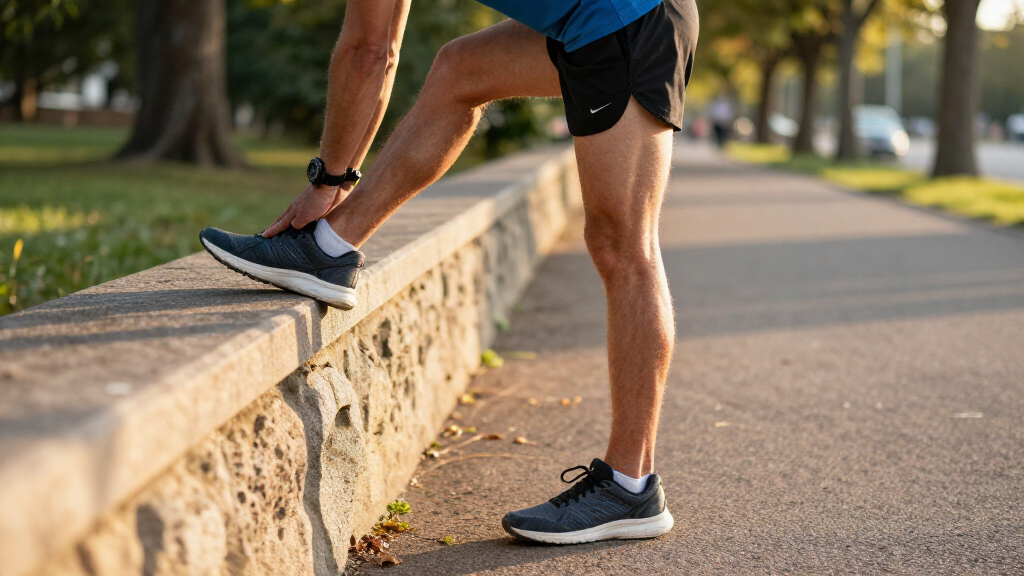
The writer said her runs had previously been limited to about three miles before pain associated with her recurring IT band syndrome began. During the experiment, she held the stretch for 30 seconds on each side for the first week and increased to 45 seconds in the second. On running days, she did it both before and after her run. She ran twice a week.
Her first two runs during the trial reached about 3.25 and 3.5 pain-free miles, respectively. By the second week, she reached four miles without the pain interrupting her run. She then tried to reach five miles, a distance she said she regularly ran before pregnancy, but stopped when pain began at 4.5 miles.
The account describes one person’s experience, not a controlled test. The writer also planned to add hip-strengthening exercises and reduce her running distances after recognizing that she may have increased her mileage too quickly. The report does not isolate the effect of the stretch from changes in training, recovery or other factors.
A Mileage Gain With Limits
The reported improvement may interest runners managing a return after a break, but the trial offers no evidence that the stretch alone prevents or treats IT band syndrome. The writer’s pain-free distance increased during the two weeks, then pain returned before she reached her five-mile target. That outcome underscores the difference between a short personal report and evidence that a routine will work for other runners.
The practical point in the account is to pay attention to training load as well as mobility. The writer linked her return of pain to increasing distance too quickly and said she would dial back her plan. A reader with knee pain should not treat the reported mileage as a target or assume the same exercise is appropriate for their symptoms.
Products Worth Considering

Garmin Forerunner 570 GPS Running Smartwatch, 47mm, Aluminum, Black

Therabody Theragun Relief Massage Gun, 3-Speed, Navy

Garmin Forerunner 70 GPS Running Smartwatch, 43 mm, Black
As an affiliate, we earn on qualifying purchases.
What the Stretch Targets
Physical therapist Dr. Zaki Afzal, identified in the report as the founder of Optimize Physical Therapy and Performance, said IT band syndrome involves pain on the outside of the knee that can arise from irritation near the knee and is connected to the hip and lateral hip muscles. He cautioned that the common name “IT band stretch” can be misleading.
Afzal explained that the IT band is dense connective tissue anchored along the thigh bone, and that a hand-applied stretch is not expected to lengthen it. He said the movement may instead affect the tensor fasciae latae (TFL) and other lateral hip muscles, which could make the area feel looser. The report says the writer’s return to running followed medical clearance, and advises readers to consult a doctor if knee pain could have another cause.
What the Trial Cannot Show
The report does not establish whether the stretch caused the change in distance, how long the improvement lasted or whether it would apply to other runners. It gives no comparison period without the stretch and does not report formal assessment of the writer’s knee pain. Other influences, including gradual recovery, run pacing and training changes, are not ruled out.
The writer stopped at 4.5 miles when pain returned, but the account does not say whether she sought further evaluation or what diagnosis, if any, was confirmed during this experiment. A stretch may feel helpful to one person without addressing the cause of another person’s knee pain.
A Slower Return to Distance
The writer said she planned to reduce her running distances and keep the standing stretch and hip-strengthening exercises in her routine. The report provides no later update, so it is unknown whether those changes allowed her to resume five-mile runs or affected her symptoms over time.
For readers, the account advises checking with a doctor before trying the stretch if knee pain may have another cause. Beginners may also consult a certified personal trainer or physical therapist about form and modifications. The report does not specify a follow-up date or a broader study of the routine.
Key Questions
How far did the writer run without pain?
She reported reaching four miles without pain by the second week. Pain began at 4.5 miles on her final run, which she stopped.
Did the stretch prove it can prevent IT band syndrome?
No. This was a two-week personal experiment, without a comparison period or evidence that the stretch caused the change.
Why does the report call the stretch name misleading?
Afzal said the IT band is dense tissue anchored to the thigh bone and is not likely to lengthen through a typical stretch. He said the movement may affect muscles around the hip instead.
What should someone with knee pain do before trying it?
The report advises consulting a doctor if the pain may have another cause. Beginners can ask a certified trainer or physical therapist to check their form or suggest modifications.
Source: rss