
TL;DR

Get workout gear delivered free with Prime
- Fast, free delivery on millions of items
- Prime Video, Amazon Music and more included
- Member-only deals all year
Fit&Well published a trainer’s account of three coordination exercises used in sessions with older adults: opposite arm-and-knee raises, side step-outs with an opposite-arm reach, and catching and throwing a ball. The exercises can be adapted to a chair or standing position; the source cites a 2019 review on balance and coordination training but does not establish that these specific moves prevent falls or extend life.
Fit&Well has published a trainer’s guide to three coordination exercises she includes in classes and personal-training sessions with older adults: opposite arm-and-knee raises, side steps paired with an opposite-arm reach, and a ball-catching drill. The moves have standing and seated options, making the report relevant to readers looking for adaptable ways to practise coordinated movement; the article presents them as exercise suggestions, not as a proven way to prevent falls or extend lifespan.
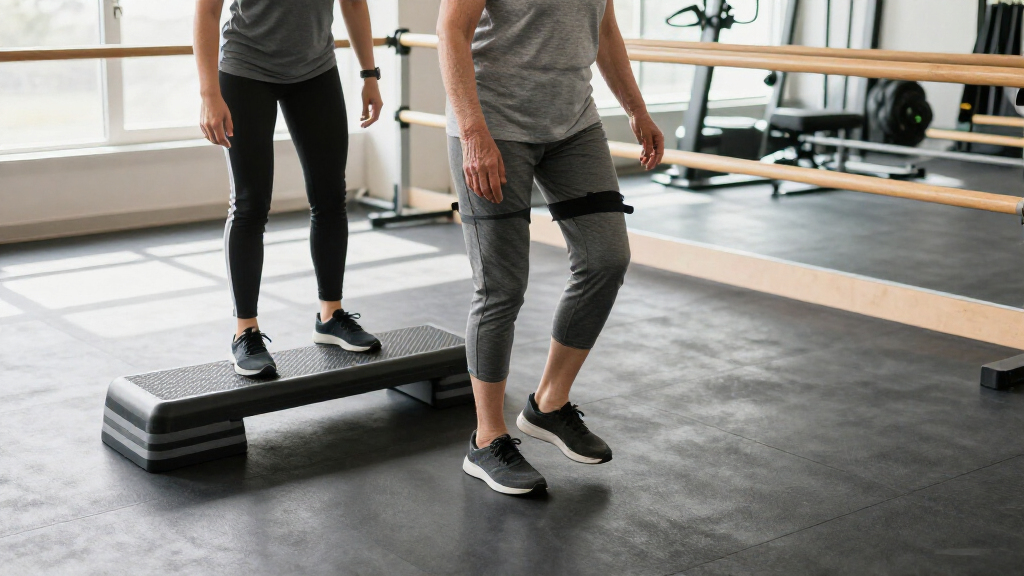
The trainer says she incorporates coordination work into chair-based yoga classes and personal training to practise linking movements between the limbs. In the first exercise, a standing participant raises one knee while bringing the opposite arm forward, then alternates sides. The suggested dose is five to six repetitions per side, performed slowly and with control. The seated alternative is a controlled march with the opposite arm raised in front or overhead.
The second drill pairs a side step with an opposite-arm reach. From a hip-width stance, the participant steps one foot sideways and reaches the other arm forward, returning to the start before switching sides. The trainer suggests five to six repetitions per side and says participants can remain upright rather than lowering into a side lunge. For a chair-based version, they step one foot out to the side and open the opposite arm at shoulder height.
The third exercise adds a moving object: standing a few steps from a wall, the participant balances on one foot and throws a ball underhand so it bounces back to be caught. The source suggests five to 10 throws, using one or both hands and changing the direction of the throw to vary the challenge. It can be made easier by standing on both feet or doing it seated, and the ball size can also be adjusted. The report does not provide a formal assessment of these exercises or a comparison with other training programs.
Coordination Practice in Daily Movement
The practical focus is on combining movements rather than working only on strength or a single action. The trainer says her clients practise these patterns to support confidence and agility in everyday situations, such as moving around other people on a bus or managing several tasks at home. Those are the trainer’s stated aims; the source does not report measured outcomes for her clients.
Offering seated and standing variations broadens the range of people who may be able to try the drills, though ability and safety will differ. The ball activity, in particular, adds a balance demand and a reaction to a moving object. Readers should treat that version as a more challenging option and use a stable setup, especially if they have balance concerns. The article does not say the exercises are appropriate for every person or substitute for individual advice from a qualified professional.
Products Worth Considering

Garmin Forerunner 570 GPS Running Smartwatch, 47mm, Aluminum, Black

Therabody JetBoots Prime Wireless Compression Boots – Short (under 29 inseam)

Therabody Theragun Prime 6th Generation Deep Tissue Massage Gun, Navy
As an affiliate, we earn on qualifying purchases.
The Review Behind the Advice
Fit&Well’s report distinguishes coordination practice from strength training, noting that strength work is not the only form of exercise relevant to ageing well. It cites a 2019 review of balance and coordination exercises in older adults, which the report says found improvements in cognitive processes such as spatial awareness, as well as postural control and stability in distracting environments.
The supplied article does not name the review, provide its authors or journal, or give details about how many studies or participants it covered. It also does not specify whether the review examined these three exercises. The research reference offers general context for the trainer’s approach, but it should not be read as evidence that this exact routine produces the same results.
“I always incorporate coordination training into my chair-based yoga classes and personal training sessions with older adults, to fire up the mind-to-muscle connection.”
— The trainer, as quoted in Fit&Well
Limits of the Evidence and Advice
The source does not provide a publication date, identify the trainer by name, or link specific outcomes to her clients. It also does not supply enough information to independently assess the cited 2019 review or determine how strongly its findings apply to this particular set of drills. Claims about sharper thinking, greater confidence, or safer movement are therefore not established outcomes of these exercises in the material provided.
There is no reported evidence here that the routine prevents falls, treats a health condition, or increases longevity. The article also gives no guidance for readers with injuries, significant balance difficulties, or other health concerns. Anyone uncertain about whether a standing or balance exercise is suitable should seek guidance from a health professional or qualified exercise instructor; the ball drill can be performed seated or on both feet, as the report suggests.
How Readers Can Use the Guide
Fit&Well’s article gives readers the exercise sequence and modifications but, in the supplied material, does not announce a follow-up study, trial, or program. Readers who choose to try the movements can start with the seated versions or the standing options that feel stable, use slow controlled repetitions, and stop if they feel unsafe or unwell. For the ball drill, the source’s easier alternatives are to remain seated or keep both feet on the floor.
The next evidence milestone would be clearer reporting on the cited review and research that tests these specific exercises, including who took part, how often they trained, and what outcomes were measured. Until such details are available in the source material, the exercises are best understood as adaptable movement ideas rather than a validated longevity program.
Key Questions
What three exercises does the Fit&Well report describe?
They are opposite arm-and-knee raises, side step-outs paired with an opposite-arm reach, and a ball throw-and-catch drill. The report gives seated modifications for each.
Can the exercises be done seated?
Yes. The article describes a seated march with an opposite-arm raise, a seated side step with an arm opening to the side, and a seated version of the ball activity. Readers should choose options that feel safe for their circumstances.
Does this routine prevent falls or extend lifespan?
The supplied report does not establish either outcome. It cites a 2019 review concerning balance and coordination exercises generally, but does not show that these three drills prevent falls or extend life.
How many repetitions does the trainer suggest?
The first two movements are suggested for five to six repetitions per side. For the ball drill, the article suggests five to 10 throws, with easier options including standing on both feet or sitting.
Source: rss