TL;DR

Get workout gear delivered free with Prime
- Fast, free delivery on millions of items
- Prime Video, Amazon Music and more included
- Member-only deals all year
A 41NBC report profiles Shae Eichele-Gawry, a former competitive cheerleader who says Abbott’s dorsal root ganglion stimulation system helped relieve pain from complex regional pain syndrome. Her experience is a personal account, not evidence that the therapy works for every patient; the report provides no clinical outcome data or detailed treatment timeline.
Shae Eichele-Gawry, a former competitive cheerleader from Georgia, says an Abbott nerve stimulation system brought relief from persistent pain caused by complex regional pain syndrome (CRPS), according to a recent 41NBC report. The story describes her return to an active life, while offering an individual account rather than evidence of how the treatment performs across patients.
Eichele-Gawry was 18 when an advanced cheerleading stunt ended her competitive career and was followed by severe pain in her left leg and ankle. The report says she underwent multiple surgeries and continued therapy, but the pain persisted. Doctors took more than two years to diagnose CRPS, according to the station.
After the diagnosis, Eichele-Gawry found relief using the Abbott Proclaim DRG System, the report says. DRG refers to the dorsal root ganglion, a cluster of nerve cells near the spine. The system sends electrical pulses to targeted nerves; the report describes the aim as interrupting pain signals before they reach the brain.
41NBC says Eichele-Gawry is now an award-winning bodybuilder and has resumed an active lifestyle. The segment also features Dr. Allen Burton, identified as divisional vice president and chief medical officer of Abbott’s neuromodulation business. The supplied report does not include a detailed treatment timeline, measured pain scores or independent clinical findings about her outcome.
A Personal Account of CRPS Treatment
The story gives readers a view of how long-lasting pain can affect daily life and how difficult it may be to reach a diagnosis. Eichele-Gawry’s account describes pain severe enough to make getting out of bed difficult, followed by a return to activities she values after treatment.
Her experience may be useful to people seeking to understand one treatment option, but it should not be read as a guarantee. The report does not establish that the system will provide similar relief for others, nor does it compare the device with other care. Treatment decisions for CRPS require individual medical assessment.
Products Worth Considering

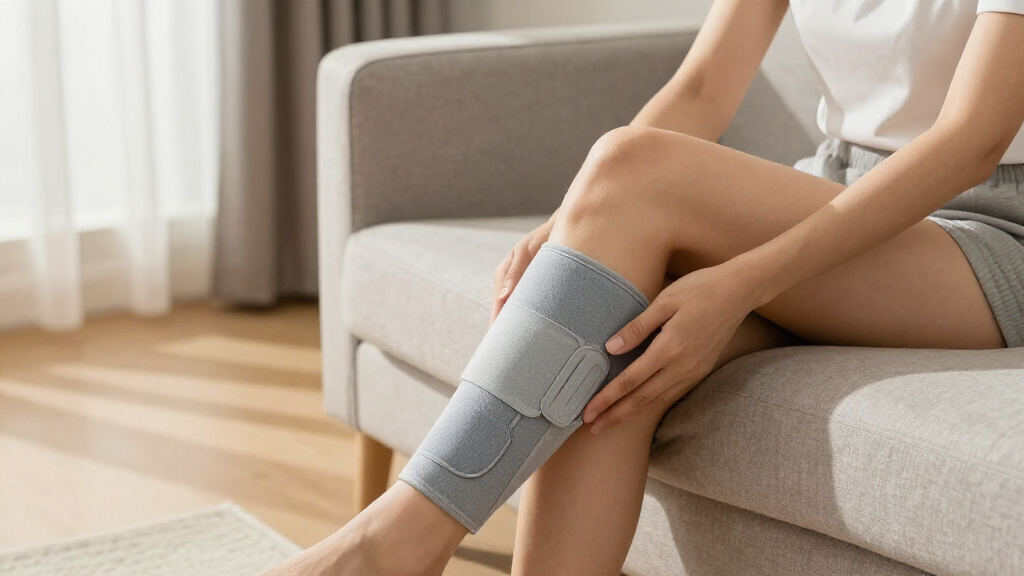
Hyperice Normatec Elite Wireless Compression Boots, Standard Size

Philips Sonicare ProtectiveClean 5300 Rechargeable Electric Toothbrush with 3 Brush Heads, Black

Garmin Forerunner 265S 42 mm GPS Running Watch, Light Pink and Powder Gray
As an affiliate, we earn on qualifying purchases.
From Cheerleading Injury to Diagnosis
According to 41NBC, Eichele-Gawry’s pain began after the stunt-related injury at age 18. She had surgeries and therapy before receiving a CRPS diagnosis more than two years later. That sequence is central to the report: her story is not only about a device, but also about the extended period of symptoms before diagnosis.
The station characterizes CRPS as a condition in which the body overreacts after an injury or surgery, producing severe, persistent pain and inflammation. Its report says the condition affects more than 200,000 people in the United States each year; the supplied material does not identify the estimate’s source or methodology. The device discussed is one form of neuromodulation, using electrical stimulation directed at nerves associated with pain.
“It took more than two years before doctors diagnosed her with complex regional pain syndrome.”
— 41NBC report
What the Report Does Not Establish
The supplied report does not give the dates when Eichele-Gawry received the device, how long she has used it, or how her pain changed over time. It also does not state whether she continues other treatments or describe side effects, complications or follow-up care.
The account is one patient’s reported experience. No study results, comparison with other therapies or independent evaluation of her outcome are included in the material. The report also does not explain how clinicians decide which patients may be candidates for this system. Those details are needed to assess how broadly the experience may apply.
Further Details on Treatment and Outcomes
41NBC says its segment includes Eichele-Gawry and Dr. Allen Burton discussing CRPS and how her life changed with the therapy. The source material directs viewers to watch the full interview through the station’s digital platforms, but does not give a date for any further reporting or a follow-up on her condition.
Readers seeking treatment information would need to consult qualified clinicians and more detailed evidence about the device, its risks and its intended use. Any further account of Eichele-Gawry’s progress would help clarify the duration and nature of the relief she describes; no such update is provided in the supplied report.
Key Questions
What happened to Shae Eichele-Gawry?
41NBC reports that an injury during a cheerleading stunt at age 18 was followed by persistent pain in her left leg and ankle. After surgeries and therapy, doctors diagnosed her with CRPS more than two years later.
What treatment does the report describe?
The report says Eichele-Gawry found relief using Abbott’s Proclaim DRG System, which sends electrical pulses to targeted nerves near the spine to interrupt pain signals. The source does not provide detailed clinical results.
Does her experience show the device works for everyone with CRPS?
No. The report describes one person’s experience and does not include trial results or evidence comparing outcomes among patients. Her reported relief cannot establish what results another person may have.
What remains unknown about her treatment?
The supplied report does not state when treatment began, how long she has used the system, how much her pain changed on a measured scale, or whether she experienced side effects. It also does not describe other care she may receive.
Source: 41nbc.com