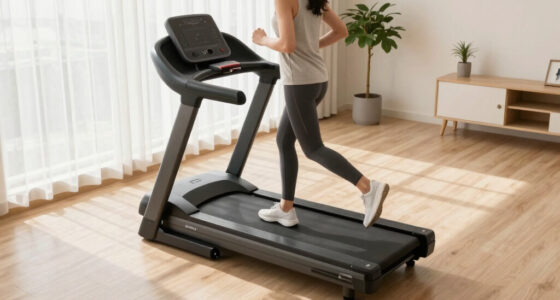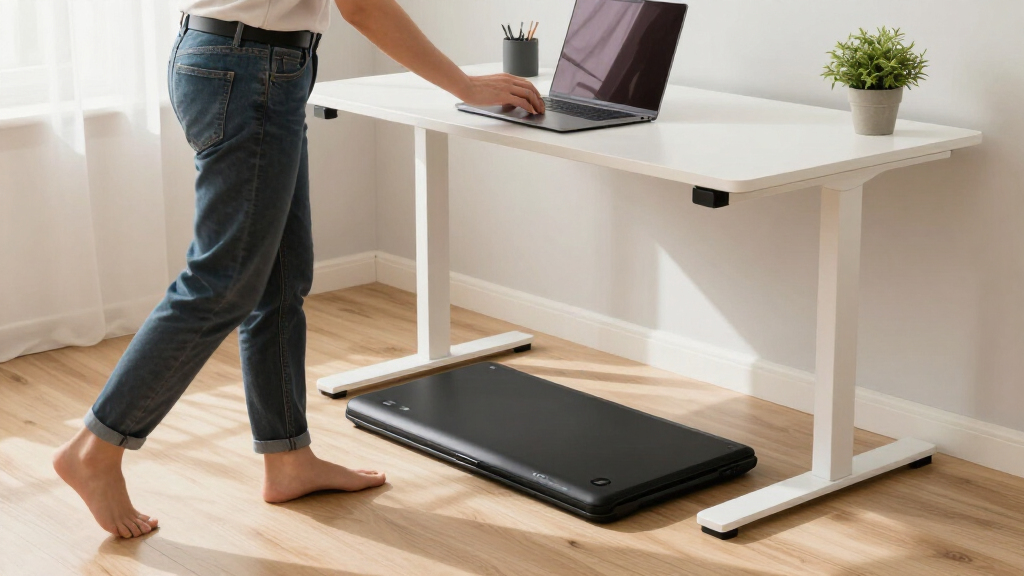

The best walking pad for home use balances three things that rarely coexist: a quiet enough motor to use during calls, a slim folding frame that fits under a sofa or stands against a wall, and enough incline to make a slow walk actually raise your heart rate. The MERACH UltraWalk W60 earns the top spot because its 12% auto incline and refined belt make it the closest thing to a full treadmill in a walking-pad footprint. The Acezoe 4-in-1 is the strongest all-around alternative with its 10% incline and dual LED display, while the Foldable Walking Pad with Handle Bar models suit anyone who wants stability support without a full treadmill frame. The main tradeoff in this category is incline versus portability, and handlebars versus storage space. Keep reading for the full breakdown of all 15 models and who each one fits best.

Get workout gear delivered free with Prime
- Fast, free delivery on millions of items
- Prime Video, Amazon Music and more included
- Member-only deals all year
Complete the kit


Key Takeaways
- Auto incline (like the MERACH W60’s 12%) delivers a materially better workout than manual incline, but it adds weight and reduces how flat the pad folds for storage.
- Handlebars are the biggest structural dividing line in this lineup: models like the UYOGA V300-DF1 and LONTEK trade slide-under-a-sofa storage for stability that nervous or older walkers genuinely need.
- Motor power matters less than motor quality at walking speeds — the 3.0 HP model with 9% incline stayed smoother at low speeds than several higher-spec competitors.
- Manual incline models (the 0.6–6.2 MPH pad and the Foldable Manual Incline) are the value plays of the group, but expect to set the angle by hand and lose mid-walk intensity changes.
- Compact no-frills pads with remotes are best reserved for pure under-desk use; they struggle once you want incline, brisker paces, or a console worth reading.


| walking pads for home | Weight Capacity | Motor |
|---|---|---|
| Acezoe Walking Pad with 10% In | 300 lbs | 2.5 HP |
| Foldable Walking Pad Treadmill | 264 lbs | 440 W |
| MERACH UltraWalk W60 Walking P | 400 lbs | 1.25 CHP / 3.5 HP peak brushless |
| Walking Pad Treadmill with 5% | — | — |
| Foldable Walking Pad Treadmill | 220 lbs | 480 W |
| Walking Pad Treadmill with Inc | 220 pounds | — |
| Compact Walking Pad Treadmill | 264 lb (120 kg) | 2.5 HP (500+ W) |
| Foldable Walking Pad Treadmill | 300 lbs | 3.0 HP |
| UYOGA V300-DF1 Compact Treadmi | 350 lb | 3 HP |
| Compact Under-Desk Walking Pad | 265 pounds | 2.5 HP |
| LONTEK Incline Walking Pad Tre | — | — |
| Walking Pad Treadmill with Adj | — | — |
| Walking Treadmill Pad with Adj | — | — |
| Terluxra Foldable Walking Pad | — | — |
| Foldable Walking Pad Treadmill | — | — |
More Details on Our Top Picks
Acezoe Walking Pad with 10% Incline and Dual LED Display
Among every walking pad in this roundup, the Acezoe delivers the most balanced package for the money. Its 10% maximum incline nearly matches the MERACH UltraWalk W60’s 12% but comes with a wider speed ceiling than lighter models like the 4 MPH under-desk pad, so it covers walking, brisk striding, and light jogging without feeling limiting. The dual shock-absorption claim translates into a real outcome: less ankle and knee fatigue during long workday sessions.
The tradeoff is weight — at roughly 57 lb, it’s not a pad you’ll slide in and out from under a sofa daily, and its 6.6 MPH cap rules out genuine running. Compared with the MERACH, you give up app polish and a 400 lb capacity, but you gain a slimmer folded profile that hides under a bed.
Pros:- Three incline levels up to 10% for serious calorie burn
- 2.5 HP motor handles light jogging, not just walking
- Dual shock-absorption reduces joint impact
- Folds to under 5 inches thick with transport wheels
Cons:- At 25.8 kg, it’s heavier to maneuver than slim under-desk pads
- 6.6 MPH ceiling is too low for dedicated runners
Best for: Home office workers who want incline training and light jogging in one foldable machine
Not ideal for: Runners or taller users with long strides — the speed cap and compact deck will frustrate both
- Max Speed:6.6 mph
- Motor:2.5 HP
- Max Incline:10% (3 levels)
- Weight Capacity:300 lbs
- Folded Size:47.2 x 23.0 x 4.5 in
- Display:Dual LED
- Unit Weight:25.8 kg (56.9 lb)
Our verdict“If you want one walking pad that does a bit of everything — incline, jogging, desk use — this is the most well-rounded choice in the lineup.”
Foldable Walking Pad Treadmill with Handle Bar
Most walking pads in this guide ask you to walk rail-free, which is fine until you’re checking email mid-stride. This model’s removable handrails make it the standout pick for anyone who values something to hold — an edge over the Acezoe, which offers no rail option at all. The 440 W motor keeps things quiet enough for calls, and the pause function that retains workout data for ten minutes is a thoughtful touch for interrupted workdays.
The catch: converting it into a flat under-desk pad means unscrewing the handrails by hand, so it’s really a either/or machine rather than a quick-switch one. Its 264 lb capacity also trails the MERACH W60’s 400 lb rating, and the 90 cm deck is on the shorter side.
Pros:- Removable handrails add confidence for unsteady walkers
- Pause function preserves workout data for 10 minutes
- Quiet 440 W motor suits shared workspaces
- Includes phone holder and transport wheels
Cons:- Handrails require unscrewing bolts to remove for under-desk use
- 264 lb weight capacity is among the lowest here
Best for: Older adults or anyone unsteady on their feet who wants handrail support at home
Not ideal for: People who plan to frequently switch between desk mode and rail mode — the bolt-on removal gets tedious fast
- Speed Modes:Walking 0.6-1.2 mph; jogging 1.9-2.5 mph; running 3.1-4 mph
- Motor:440 W
- Weight Capacity:264 lbs
- Running Area:90 x 38 cm
- Folded Size:104 x 48.7 x 10.5 cm
- Belt:5-layer non-slip
- Controls:Remote; LED display
Our verdict“This pick makes the most sense for stability-focused walkers who’d rather have rails and skip the incline than chase the feature-rich options above.”
MERACH UltraWalk W60 Walking Pad Treadmill with 12% Auto Incline
The MERACH UltraWalk W60 is the most ambitious machine in this roundup, and it earns the premium slot on build alone. A 400 lb weight capacity, reinforced steel frame, and a brushless motor rated for up to 15,000 hours put it in a different durability class than the 480 W foldable model or the handrail pad, both of which cap out at 220–264 lb. Its 12% auto incline adjusts at the press of a button — no bending down to reposition, unlike every manual-incline option here.
That sturdiness costs you in portability: at 67.7 lb, moving it between rooms is a two-person chore, and its 53.6 dB output is fine but not library-quiet. Compared with the Acezoe, you trade a slimmer fold for a heavier, tank-like frame and better app integration.
Pros:- 400 lb capacity — the highest in this roundup
- 12-level auto incline adjusts without stopping your workout
- Brushless motor rated for up to 15,000 hours
- App control plus Apple Health and Google Fit syncing
Cons:- Heaviest pad here at 67.7 lb, awkward to relocate
- 41.3-inch deck may feel short for tall walkers
Best for: Heavier users and dedicated daily walkers willing to pay more for a frame that lasts years
Not ideal for: Apartment dwellers who need to stash the pad under furniture — the weight and bulk make frequent moving impractical
- Motor:1.25 CHP / 3.5 HP peak brushless
- Incline:12% auto, 12 levels
- Weight Capacity:400 lbs
- Deck Size:16.5 x 41.3 in
- Frame Weight:67.7 lbs
- Noise Level:53.6 dB average
- Connectivity:Bluetooth speaker, Apple Health, Google Fit
Our verdict“This model is better suited to buyers who prioritize durability and automatic incline over portability, and it justifies its premium role on spec sheet alone.”
Walking Pad Treadmill with 5% Incline – Under Desk Running Machine
Sometimes simple wins. This no-frills under-desk pad is the lightest, least complicated option in the guide, and that’s exactly its appeal. Compared with the MERACH W60, there’s no app, no auto incline, and no speaker — but there’s also none of the weight or setup fuss. The 5% manual incline adds just enough challenge to elevate a lazy stroll, and the 4 MPH ceiling is genuinely sufficient if your goal is hitting step counts while answering emails rather than training.
Be honest with yourself about that ceiling, though: unlike the Acezoe with its 6.6 MPH range, this is a walking-only machine. Adjusting the incline by hand also means interrupting your session, and thin builds like this tend to feel less planted under heavier users.
Pros:- Lightweight and easy to slide under desks or beds
- Quiet enough for phone calls and meetings
- 5% incline adds calorie burn without complexity
- Straightforward remote-only operation
Cons:- Manual incline requires stopping to adjust
- 4 MPH top speed excludes jogging entirely
Best for: Step-counters and remote workers who want a cheap, quiet, slide-under-the-desk pad and nothing more
Not ideal for: Anyone who wants to jog or track structured workouts — the 4 MPH cap and barebones remote leave no headroom
- Max Speed:4 mph
- Incline:5% manual
- Controls:Remote control
- Design:Under-desk, portable, flat-folding
- Power:Electric (corded)
Our verdict“For pure desk-walking on a budget, this covers the basics — just don’t expect it to grow with you past a walking pace.”
Foldable Walking Pad Treadmill with Manual Incline, 0.6–6.2 MPH
Where the budget under-desk pad asks you to improvise your own routine, this foldable model brings 12 preset programs plus countdown modes for time, distance, and calories — a structured-training feature none of the other four pads in this batch offer. With a 0.6–6.2 MPH range, it covers a genuine jog, sitting between the 4 MPH budget pick and the Acezoe’s 6.6 MPH top end. Safety handrails and a cushioned five-layer belt round out a package aimed at people who treat walking as exercise, not background movement.
The limitation is capacity: 220 lb maximum is the lowest here, below even the handrail model’s 264 lb. The manual incline also lacks the push-button convenience of the MERACH’s 12-level system, and the compact 35-inch belt suits shorter strides best.
Pros:- 12 preset programs add structure and variety
- Speed range supports walking through light running
- Folds to a slim 4.7-inch profile
- Safety handrails and cushioned belt included
Cons:- 220 lb weight capacity is the lowest in this roundup
- Manual incline is less convenient than auto-adjusting systems
Best for: Motivated users who want guided preset workouts and progress tracking without a gym membership
Not ideal for: Users over 220 lbs or runners with long strides — the capacity cap and short belt are hard limits
- Speed Range:0.6–6.2 mph
- Motor:480 W
- Weight Capacity:220 lbs
- Running Area:35 x 14.4 in
- Folded Size:40.5 x 18 x 4.7 in
- Programs:12 presets with time/distance/calorie countdowns
- Display:LCD (speed, time, distance, calories)
Our verdict“This option stands out for walkers who get bored without programs and goals — as long as you’re under its weight limit.”
Walking Pad Treadmill with Incline and Handle Bar
This model keeps things deliberately simple, and that restraint is its strength. With a top speed of 3.8 mph, it targets walkers who want long, slow sessions rather than intervals or jogs. The handlebar adds stability that flat, bar-less pads like the Compact Under-Desk Walking Pad don’t offer, which matters for older users or anyone balancing while reading during calls. Silicone shock absorbers and a five-layer belt soften each step, making it easier on knees than firmer decks.
The tradeoff is ceiling: compared with the Foldable Walking Pad with 9% Incline, which reaches 7.5 mph, this pad offers no room to progress into running. The incline is present but unspecified, so buyers chasing serious calorie burn should look elsewhere.
Pros:- Handlebar provides stability for balance-conscious walkers
- Silicone shock absorbers and five-layer belt cushion each step
- Transportation wheels make storage manageable despite the handlebar
- Remote control lets you adjust speed mid-stride
Cons:- 3.8 mph top speed limits you to walking pace
- Incline grade is unspecified, so workout intensity claims are hard to verify
Best for: Older adults or balance-conscious walkers who want a handlebar and joint-friendly cushioning for slow, steady daily walks
Not ideal for: Anyone hoping to jog or ramp up intensity over time — the 3.8 mph cap closes that door
- Speed:0.6–3.8 mph
- Weight Capacity:220 pounds
- Dimensions:47.2 x 19.6 x 4.6 inches
- Display:LED (speed, distance, time, calories)
- Controls:Remote control
- Belt:Five-layer non-slip running belt
- Cushioning:Silicone shock absorbers
Our verdict“A sensible pick if you value a handlebar and cushioned, low-impact walking over speed or incline ambition.”
Compact Walking Pad Treadmill for Home and Office
What sets this pad apart is arrival logistics: it comes fully assembled, so you unbox it, plug it in, and walk. Compare that with the Foldable Walking Pad with 9% Incline, which requires PitPat app activation before your first session — a small hurdle, but one this model skips entirely. At roughly 16 kg with a slim profile, it slides under sofas and beds more easily than heavier options like the UYOGA V300-DF1.
The 2.5 HP motor handles its 1–6 km/h range smoothly, and the diamond-textured belt grips reliably. But that speed range is strictly walking territory, and the 38.5 cm wide walking surface feels tight compared with roomier decks elsewhere in this roundup. If you drift while distracted, expect the occasional belt edge.
Pros:- Ready to use straight out of the box with no assembly
- Slim, lightweight build stores easily under furniture
- Cushioned anti-slip belt reduces walking impact
- 2.5 HP motor delivers smooth, steady performance at walking speeds
Cons:- 6 km/h maximum caps it at walking pace permanently
- Walking area is on the narrow side for larger users
Best for: Apartment dwellers and remote workers who want a true plug-and-walk machine that stores under furniture
Not ideal for: Taller or wider walkers who need a roomier deck, or anyone who might want to jog someday
- Motor:2.5 HP (500+ W)
- Speed Range:1–6 km/h
- Weight Capacity:264 lb (120 kg)
- Dimensions:109 x 50 x 11 cm
- Walking Area:38.5 x 94 cm
- Assembly:None required
- Controls:Remote control with LED display
Our verdict“The easiest entry point in this batch for under-desk walkers who want zero setup and simple storage.”
Foldable Walking Pad Treadmill with 9% Incline and 3.0 HP Motor
This is the pick for buyers who see a walking pad as a fitness tool, not just a step counter. The 3.0 HP motor pushes speeds up to 7.5 mph — actual jogging territory — while the 9% incline lets you simulate hills, something the Compact Under-Desk Walking Pad and its 4 mph ceiling simply can’t touch. Running under 55 dB, it stays quiet enough for shared households or calls.
The foldable design collapses to just 5.45 inches tall for under-sofa storage, though at 49.5 lbs it’s heavier to wrestle than lighter models like the Compact Walking Pad for Home and Office. The real friction point is the mandatory PitPat app activation before first use — if you want a dumb, app-free machine, this isn’t it.
Pros:- 9% incline and 7.5 mph top speed support genuinely varied workouts
- Folds to 5.45 inches for under-furniture storage
- Motor runs under 55 dB for quiet home use
- 300 lb weight capacity is generous for this category
Cons:- PitPat app activation is required before the first run
- At 49.5 lbs, it’s heavier to move than slimmer walking-only pads
Best for: Walkers ready to progress into incline workouts and light jogging who want a foldable, quiet machine
Not ideal for: Tech-averse buyers — the required app activation and Bluetooth-dependent features add friction before you can even start walking
- Speed Range:0.6–7.5 mph
- Motor:3.0 HP
- Maximum Incline:9%
- Weight Capacity:300 lbs
- Noise Level:Under 55 dB
- Folded Height:5.45 inches
- Controls:Remote control and smartphone app
- Display:LED with Bluetooth connectivity
Our verdict“The most versatile trainer here for anyone who wants hills and jogging speed alongside everyday walking.”
UYOGA V300-DF1 Compact Treadmill with Handlebar and Incline
If incline is your priority, this model plays in a different league: 15% maximum incline dwarfs the 9% on the Foldable Walking Pad with 9% Incline and approaches dedicated hill trainers. Combined with a 7.6 mph top speed, it supports everything from slow recovery walks to sweat-drenched climbing sessions. The 350 lb weight capacity is the highest in this batch, and the included handlebar adds confidence at steep grades.
Where it compromises is the deck. At 41.34 inches long, it’s shorter than the 47-inch-plus belts on competing models, so runners with longer strides may feel cramped at top speed. Connectivity is limited to auxiliary input — no Bluetooth or app ecosystem — which feels dated next to app-connected rivals.
Pros:- 15% incline is the steepest in this lineup for serious calorie burn
- 350 lb weight capacity accommodates larger users
- 0.6–7.6 mph range covers walking through running
- Handlebar adds stability during steep incline work
Cons:- 41.34-inch deck is short for taller runners
- Auxiliary-only connectivity lacks Bluetooth or app support
Best for: Heavier users and incline-focused walkers who want the steepest climb and highest weight capacity available
Not ideal for: Tall runners with long strides — the short 41-inch deck becomes a real constraint at jogging speeds
- Speed Range:0.6–7.6 mph
- Maximum Incline:15%
- Weight Capacity:350 lb
- Motor:3 HP
- Dimensions:41.34 x 18.5 x 37.4 in
- Folded Dimensions:41.34 x 18.5 x 3.94 in
- Weight:36 lb
- Display:18-inch LED
Our verdict“The strongest choice here for incline training and higher weight capacity, as long as your stride fits the shorter deck.”
Compact Under-Desk Walking Pad Treadmill with Remote
At just 4.1 inches tall, this is one of the slimmest options in the roundup, built specifically for sliding under a standing desk and staying there. Its 0.6–4.0 mph range is tuned for the workflow sweet spot — slow enough to type at 1 mph, brisk enough for a proper pace break — unlike the UYOGA V300-DF1, whose 7.6 mph capability mostly goes wasted in an office setting. At 40 inches long, it’s also the most compact footprint here, ideal for tight corners.
The bundled lubricating oil and hex wrench signal easy long-term maintenance, and setup is nonexistent. The catch is the modest 2.5 HP motor and the hard 4 mph ceiling — this is a walking tool, full stop, and the 265 lb capacity trails the 300-plus ratings of incline models.
Pros:- 4.1-inch profile is among the slimmest for under-desk use
- No assembly required — unbox and walk
- Includes maintenance accessories like lubricating oil and hex wrench
- Remote and LED display make mid-work speed adjustments simple
Cons:- 4 mph top speed restricts it to walking only
- 265 lb weight capacity trails higher-rated incline models
Best for: Standing-desk workers who want a low-profile pad that lives under the desk and supports all-day slow walking
Not ideal for: Anyone planning fitness workouts — the 4 mph cap and 265 lb capacity make this a desk accessory, not a trainer
- Speed Range:0.6–4.0 mph
- Motor:2.5 HP
- Weight Capacity:265 pounds
- Dimensions:40 x 19.2 x 4.1 inches
- Assembly:None required
- Display Metrics:Time, speed, distance, calories
- Included:Remote control, lubricating oil, hex wrench, user manual
Our verdict“Purpose-built for the under-desk lifestyle — buy it for workday steps, not training.”
LONTEK Incline Walking Pad Treadmill with Handles
The LONTEK stands apart from every other pad in this lineup by offering three incline positions — flat, 10%, and a steep 15% — which is the range you need if walking on a flat belt has stopped producing results. Most competitors top out around 8% or 12%, like the MERACH UltraWalk W60’s auto incline, so the LONTEK gets you closer to real hill-training intensity. Add a 3.0 HP brushless motor and a 350-pound weight capacity, and this is the most robust machine in this batch by a wide margin.
The tradeoff is that incline changes require manual repositioning of the legs or pads, so you can’t adjust mid-workout the way an auto-incline model allows. The 37.4 × 15-inch deck also runs short for jogging, and the 45-pound frame is heavier to slide under a sofa than lighter options like the Terluxra.
Pros:- Three incline options including a 15% grade, the steepest in this batch
- 3.0 HP brushless motor with a 350 lb weight capacity, the strongest here
- Runs below 45 dB, quiet enough for shared living spaces
- Cushioned belt and side impact strips reduce joint stress on incline work
Cons:- Incline changes require manually repositioning legs or pads
- The 37.4 × 15-inch surface may feel narrow and short for taller users
Best for: Walkers who want serious hill-style training and a high weight capacity without buying a full-size treadmill
Not ideal for: Anyone who wants to change incline mid-workout — every adjustment means getting off and manually resetting the legs
Our verdict“This pick makes the most sense for buyers whose priority is incline intensity and build strength over convenience features.”
Walking Pad Treadmill with Adjustable Incline and Handle Bar
What separates this walking pad from flashier options like the LONTEK is its focus on balance and support: a built-in handle bar plus a gentle 4-degree manual incline makes it the most confidence-inspiring choice for anyone unsteady on a moving belt. Compared with handle-less models such as the Compact Under-Desk Walking Pad, the bar gives you something to grip during long walking sessions, which matters if you plan to walk while watching TV rather than typing at a desk.
The compromises are real, though. The 3.8 mph ceiling is strictly walking pace — no jogging — and the 2.5 HP motor sits in the middle of this batch rather than at the top. More frustrating for careful shoppers: no belt dimensions or weight capacity are published, so heavier buyers should look to the LONTEK’s documented 350-pound limit instead.
Pros:- Handle bar provides stability that most walking pads lack
- Foldable design stores easily in small homes or offices
- Quiet brushless motor with LED tracking of time, distance, speed, and calories
- Gentle 4-degree incline adds intensity without intimidating beginners
Cons:- 3.8 mph top speed limits use to walking only
- No published belt dimensions or weight capacity makes buying confidence difficult
Best for: Older adults or anyone who values a handle bar for balance during steady walking workouts
Not ideal for: Heavier users or anyone wanting documented specs — belt size and weight capacity aren’t stated, and there’s no jogging capability
Our verdict“Choose this if a handle bar for balance is your non-negotiable feature; skip it if you need verified specs or jogging speed.”
Walking Treadmill Pad with Adjustable 8% Incline
This model earns its spot as the quiet under-desk workhorse. Running under 45 dB with a 2.5 HP motor and a 15 × 35.4-inch belt, it hits the sweet spot for people who walk during video calls — quieter in practice than busier machines, and the included remote lets you dial speed without breaking focus. Compared with the Terluxra, which shares the same 4 mph ceiling, this pad offers a meaningful 8% incline for intensity that flat-only office pads can’t match.
The 6-layer shock absorption in the belt is a genuine plus for all-day walkers, though the 265-pound weight limit is noticeably lower than the LONTEK’s 350 pounds. And the incline is fixed rather than selectable, so you get one setting rather than a range. If your walking stays at desk pace and you want quiet operation above all, this is the stronger choice over louder, more powerful pads.
Pros:- Motor stays under 45 dB, ideal for calls and shared spaces
- 8% incline adds intensity that flat office pads lack
- 6-layer shock-absorbing belt comfortable for long sessions
- Compact footprint with remote control for hands-free adjustment
Cons:- 4 mph maximum speed excludes any real running
- 265 lb weight capacity trails stronger picks like the LONTEK
Best for: Remote workers who walk for hours at a desk and need near-silent operation with a modest intensity boost
Not ideal for: Users over 265 pounds or anyone wanting to run — the 4 mph cap and moderate weight limit rule out both
Our verdict“This is the pick for desk-bound walkers who prize quiet, cushioned comfort over raw speed or capacity.”
Terluxra Foldable Walking Pad Treadmill with Handle Bar
The Terluxra is the easiest entry point in this batch, thanks to a three-mode structure — walking (0.6–1.5 mph), jogging (1.5–2.5 mph), and running (2.5–4 mph) — that removes guesswork for people new to treadmill workouts. Rather than fiddling with fine speed increments, beginners get clearly labeled zones, and the handle bar adds stability that the bare Compact Under-Desk Walking Pad doesn’t offer. Front rollers also make it one of the simpler pads to roll into a closet after use.
Its 2.0 HP motor is the smallest in this lineup, which keeps it affordable but caps performance: the 4 mph top speed matches the 8% Incline pad, yet neither matches the LONTEK’s 6.2 mph range. The 242-pound weight capacity is also the second-lowest here. And unlike most competitors, Terluxra doesn’t publish deck or folded dimensions, so measure your space cautiously before committing.
Pros:- Three labeled speed modes simplify use for first-time owners
- Handle bar adds confidence for unsteady beginners
- Shock-absorbing belt with honeycomb blocks cushions each step
- Folds flat with front rollers for easy storage
Cons:- 4 mph maximum and 242 lb weight capacity are both on the low end
- No published dimensions or folded size make space planning a gamble
Best for: Treadmill newcomers who want guided speed modes and a handle bar at a gentle entry point
Not ideal for: Taller or heavier users and anyone who wants jogging capability — the 242 lb limit and 4 mph ceiling are restrictive
Our verdict“A sensible starter pad if you value simplicity and support; outgrow it quickly if you want speed or incline training.”
Foldable Walking Pad Treadmill with Manual Incline
Where most walking pads in this roundup hand you a remote and call it a day, this model includes 12 preset programs plus three countdown modes for time, distance, and calories — structure that keeps home workouts from going stale. The 0.6–6.2 mph speed range matches the LONTEK’s, giving it genuine jogging capability that slower pads like the Terluxra and the 8% Incline model can’t touch, and its 4.7-inch folded profile slides under most beds. Safety handrails and a device holder round out a package aimed at structured home training.
The catch is power: a 480 W motor is modest for sustained top-speed running, and the 220-pound weight capacity is the lowest in this batch, well under the LONTEK’s 350 pounds. The 14.4-inch belt width is also the narrowest here, and incline — like the LONTEK’s — is manual rather than push-button.
Pros:- 12 preset programs and 3 countdown modes add workout variety few pads offer
- 0.6–6.2 mph range supports walking, jogging, and light running
- Folds to just 4.7 inches thick with transport wheels
- Safety handrails and device holder included
Cons:- 220 lb weight capacity is the lowest in this lineup
- 480 W motor may strain under sustained top-speed use
- 14.4-inch belt width is narrow, and incline is manual only
Best for: Motivation-driven walkers who want preset programs and goal countdowns to stay consistent at home
Not ideal for: Users over 220 pounds or anyone with a wide stride — the capacity and 14.4-inch belt are the tightest in this roundup
Our verdict“Pick this for built-in workout structure and compact folding; pass if you’re near the weight limit or need incline flexibility.”

How We Picked
I evaluated every walking pad here against the realities of home use rather than spec-sheet bragging rights. The criteria that separated the rankings were incline type and range (auto vs. manual, and whether 5–12% actually translates into meaningful calorie burn), foldability and storage footprint (does it slide under furniture or need wall space), motor smoothness and noise at walking speeds, and stability features like handlebars and deck construction. I also weighed console usability — a display you can read mid-stride and a remote that doesn’t require pointing precision — plus assembly burden and weight capacity.
The ranking logic favors pads that commit to a clear identity. Models that try to be both an under-desk slider and a brisk-walking trainer with handles tended to rank lower than purpose-built options, because the compromises showed up in fold thickness and wobble. Value placements went to manual-incline pads that deliver 80% of the workout at a simpler design, while premium spots went to auto-incline models like the MERACH W60 that justify their complexity with genuine training range.
Factors to Consider When Choosing Walking Pads For Home
Before picking a specific model, it helps to understand what actually differentiates walking pads — and where buyers most often regret their choice.Auto Incline vs. Manual Incline
Incline is the single biggest workout multiplier on a walking pad, and the type matters as much as the percentage. Auto incline lets you raise the deck mid-walk via remote or console, which keeps you walking longer because you never break stride. Manual incline requires stopping, dismounting, and adjusting a pin or lever — fine if you set it once per session, frustrating if you like interval-style walking. Manual systems do have an upside: fewer moving parts means fewer failure points and a lighter frame. If your goal is casual step-count accumulation, manual is a reasonable savings. If you’re walking for cardio fitness or weight management, auto incline between 9% and 12% changes the math entirely, because a 12% grade at 3 MPH burns roughly double the calories of flat walking at the same pace.
Foldability and Where It Will Actually Live
Every pad here is marketed as foldable, but the folded dimensions vary more than the marketing suggests. The real question is where the pad goes when you’re not using it — and measuring that space before buying is the most skipped step in this category. Pads with handlebars almost never slide under a sofa; they’re designed to fold vertically and lean against a wall. Slim two-hinge designs fit under most beds but often sacrifice deck length, which matters if you’re tall and have a long stride. A useful rule: measure your storage spot, subtract two inches from the manufacturer’s folded figures for real-world clearance, and only then compare models. Buyers who skip this step end up with a pad that lives permanently in the middle of the room — and gets used less because of it.
Motor Noise and Household Impact
Walking pads live in living rooms, bedrooms, and home offices, which means motor noise determines whether you’ll actually use the thing during a work call or while others sleep. Motor power ratings are misleading here — a higher HP number does not mean quieter operation, and at walking speeds a well-built 2.0 HP motor is often smoother than a cheap 3.0 HP one. Belt quality and deck cushioning contribute as much to noise as the motor itself: a thin belt over an uninsulated deck produces a thudding footfall sound that carries through floors, a real issue in apartments. Look for descriptions emphasizing noise-dampening layers or low-decibel operation, and set expectations under 55 dB for shared spaces. If you plan to walk on carpet, add a mat — it addresses both noise and heat buildup under the motor.
Handlebars: Stability vs. Slimness
The handlebar question is where honest self-assessment pays off. If you’re steady on your feet and using the pad for under-desk walking, handlebars are dead weight that ruins the fold. But for older walkers, anyone with balance concerns, or people who brisk-walk above 3.5 MPH, a front handlebar changes the safety equation completely — a stumble on a handlebar-free pad at speed ends with you on the belt or the floor. Some models offer detachable bars, which sounds ideal but often introduces wobble where the bar mounts. The compromise most buyers land on: skip handlebars if the pad will be used seated at a desk for most of the day, and accept the thicker fold if you’ll stand and walk at pace. Be honest about which describes you, because it’s the least reversible decision in this purchase.
Speed Range and Console Usability
Walking pads top out between 3.7 and 6.2 MPH, and that ceiling should match how you actually move. A 3.7 MPH cap is fine for desk walking and strolls, but it eliminates brisk walking entirely — many adults comfortably walk 4 MPH, and a pad that maxes below that feels limiting within months. Models reaching 6+ MPH give room to grow, though anything above 4.5 MPH on a short deck demands attention to stride length and placement. Console readability is underrated: displays positioned at the front rail are invisible when the pad sits under a standing desk, so remote-based models win in that setup. Check whether the remote is a cheap credit-card style clicker or a magnetic dock — the former gets lost between couch cushions within weeks, and replacement remotes are a common hidden cost of the cheapest pads.
Weight Capacity and Build Longevity
Most walking pads list capacities between 220 and 300 pounds, and this figure is a proxy for overall build quality, not just a safety limit. A pad rated near your actual body weight will strain its motor, flex its deck, and wear its belt faster than one with comfortable headroom — a good rule is to stay at least 15% below the stated maximum for long-term durability. Heavier-rated pads also tend to have sturdier frames that don’t shimmy at incline, which connects directly to how confident you’ll feel walking hands-free. Belt thickness and roller size are the other quiet differentiators: thin belts curl at the edges over time and need more frequent tensioning. Since walking pads are hard to return once assembled and used, buying for the body you have plus durability margin, rather than the cheapest acceptable option, is the approach that holds up over years of daily steps.
Frequently Asked Questions
Can a walking pad really replace a regular treadmill for home cardio?
It depends on the incline. Flat walking at 2–3 MPH is genuinely low-intensity, so a basic pad without incline won’t replace treadmill workouts for fitness — it’s a step-count tool, not a cardio machine. That changes with steep grades: the MERACH W60 at 12% incline or the Acezoe at 10% can push your heart rate into real training zones at a walking pace, closing most of the gap with a full treadmill. Where walking pads can’t compete is running — short decks, lower speed ceilings, and walking-specific motors aren’t built for the impact of jogging. If your goal is daily movement plus occasional sweaty sessions, a high-incline pad covers it. If you run even occasionally, a folding treadmill is the better single purchase.
Is a walking pad safe to use under a standing desk while working?
Yes, with the right setup, and it’s the most popular use case for this category. You’ll want a pad with a speed floor of 0.6 MPH or lower, a quiet motor (under roughly 55 dB), and no handlebar blocking your stance — which is why the compact remote-controlled models rank well for desk use specifically. Position the pad so the belt’s center sits directly under your keyboard, and use a taller desk setting than you’d expect, since walking adds bounce to your typing height. Start at the minimum speed for a full week before increasing; most people type fine at 1–1.5 MPH but need adaptation time. The one genuine caution is stepping off mid-walk — always slow to the minimum speed before dismounting, because the most common desk-walking injuries happen during careless exits, not while walking.
Do I need a walking mat underneath, or is that an upsell?
A mat is worth it in most homes, and it’s not just about protecting the floor. Walking pad motors draw heat downward, and on hardwood or vinyl that heat plus vibration can discolor or warp flooring over months of daily use — a mat acts as both thermal and vibration insulation. On carpet, a mat is arguably more important: soft pile traps heat, lets the pad sink unevenly, and carpet fibers work into the belt rollers. The mat also stops belt dust from spreading into the room, which is a real thing with new belts during their break-in weeks. You don’t need anything branded — any dense interlocking mat slightly larger than the pad’s footprint works. Compared with the cost of refinishing a floor or replacing a belt, it’s cheap insurance that also quiets footfall noise for anyone below you.
How much maintenance does a walking pad actually require?
Less than a treadmill, but not zero — and skipping it is why cheap pads die early. The routine is simple: lubricate the belt with silicone oil every three months or roughly every 130 miles, vacuum around and under the deck monthly to keep dust out of the motor housing, and check belt tension if you notice slippage or a drifting walk. Auto-incline models add one more task — they have an additional motor, so if the incline starts hesitating, that’s usually lubrication or debris, not a broken unit. Manual-incline pads are the lowest-maintenance picks in this lineup precisely because they have fewer powered parts. Plan on a monthly five-minute check and a quarterly lubrication session; pads that get this basic care routinely last years past their warranty, while neglected ones often fail within eighteen months of daily use.
Are walking pads with handlebars better for seniors?
Usually yes, and it’s the one buyer group where I’d call handlebars close to non-negotiable. Balance demands rise with age, and a stumble on a moving belt happens faster than on flat ground because the deck keeps moving under you — a front handlebar converts that stumble into a non-event. Models like the LONTEK and UYOGA V300-DF1 pair handles with incline, which is the right combination for older walkers since moderate grades build leg strength without requiring speed. Look also at step-up height (lower is easier to mount) and a speed floor at or below 0.6 MPH for a gentle start. The tradeoff is real: handlebar models don’t slide under furniture and take permanent floor or wall space. For a senior household, that storage compromise is well worth the confidence to walk daily without a spotter nearby.
Conclusion
After comparing all 15 pads, the right pick comes down to who’s walking and where the pad will live. Best overall goes to the MERACH UltraWalk W60 — the 12% auto incline, smooth belt, and overall refinement make it the most capable walker here for people serious about fitness results. For best value, the Foldable Walking Pad with Manual Incline delivers the core incline benefit at a simpler design, with the 0.6–6.2 MPH model close behind for buyers who want a higher speed ceiling. The premium choice is the Acezoe 4-in-1, whose 10% incline, dual LED display, and versatility across walking and light running justify spending more. Beginners and under-desk walkers should start with the Compact Under-Desk Walking Pad with Remote — it’s the least intimidating and best suited to slow desk strolls. For specific needs: the LONTEK and UYOGA V300-DF1 for seniors and stability-focused walkers, the 3.0 HP 9% incline model for heavier users who need motor headroom, and the slim compact pads for tight apartments where slide-under storage is the priority. Match the pad to your actual daily routine rather than the best spec sheet, and you’ll still be using it a year from now.