
TL;DR
Starting yoga can be easy with a simple plan focused on consistency, proper technique, and mindfulness. Even ten minutes a day can lead to noticeable benefits, especially when you follow a gradual, supportive approach.
Imagine stepping onto your yoga mat for the first time and feeling surprisingly at ease. No need for perfect poses or hours of practice—just a simple plan that helps you settle in and enjoy the journey. That’s exactly what this beginner yoga roadmap offers: a clear, manageable way to make your first month feel not just doable but enjoyable.
Whether you’re looking to boost your flexibility, calm your mind, or just try something new, this guide simplifies the process. It’s about building habits, not chasing perfection. Ready to transform your approach to yoga with just a few minutes each day? Let’s go.
The Beginner Yoga Roadmap That Makes Your First Month Feel Surprisingly Simple
TL;DR: Starting yoga gets easier when the goal is consistency, proper technique, and mindful breathing. Ten calm minutes a day can build flexibility, confidence, and mental clarity without chasing perfect poses.
Short sessions lower the barrier and make practice feel realistic from day one.
Practice weekly, stay gentle, and let repetition do the heavy lifting.
Yoga becomes sustainable when it feels supportive, not like a test.
Mountain, Child’s Pose, Cat-Cow, Downward Dog, and Seated Twist.
Consistency, breath, and alignment keep the first month smooth.
A mat helps. Blocks and straps are useful but optional.
Modify, pause, or skip anything that creates sharp discomfort.
The three pillars that make week one feel doable.
Think of your first month as planting seeds: gentle, steady attention matters more than dramatic effort. These pillars create a simple structure for every session.
Consistency
Practice 3-5 times weekly, even if the session is only ten minutes. Small repeats build trust fast.
Mindful Breath
Begin with three deep belly breaths. Breath turns the routine from stretching into awareness.
Proper Alignment
Use a mirror, beginner video, or instructor cue to keep shoulders, spine, and knees supported.
| Focus Area | Why It Matters | Beginner Move | Risk Check |
|---|---|---|---|
| Consistency | Builds confidence faster than rare intense sessions. | ✓ Ten minutes after waking or before bed. | ~ Avoid all-or-nothing goals. |
| Breath | Reduces stress and improves focus during movement. | ✓ Inhale through the nose, exhale slowly. | ~ Slow down if breath feels strained. |
| Alignment | Prevents injury and makes each pose more effective. | ✓ Bend knees or use props when needed. | ✗ Never push through sharp pain. |
A gradual chain beats a complicated plan.
Your first month works best as a sequence of tiny wins. Each step supports the next, so the practice can grow without becoming intimidating.
Arrive
Roll out the mat, breathe three times, and release the need to perform.
Practice
Choose one short routine and repeat the core poses with patience.
Adjust
Modify tight or uncomfortable shapes with bent knees, blocks, or rest.
Notice
Track one small win: less tension, steadier breath, or more ease.
Three ten-minute options that fit real life.
Short, focused sessions make yoga approachable. Pick the routine that matches your energy rather than forcing a perfect time of day.
Wake-Up
Neck rolls, seated side bends, and Cat-Cow help you enter the day with gentle energy.
Reset
Downward Dog, Warrior I, and seated twists clear mental fog and refresh posture.
Relax
Legs-Up-The-Wall and Child’s Pose help your nervous system shift toward rest.
Master the basics before chasing complexity.
These five poses teach alignment, breath control, spinal awareness, and safe resting. Slower progress here pays off later.
Mountain
Stand tall and feel the ground. This builds posture awareness.
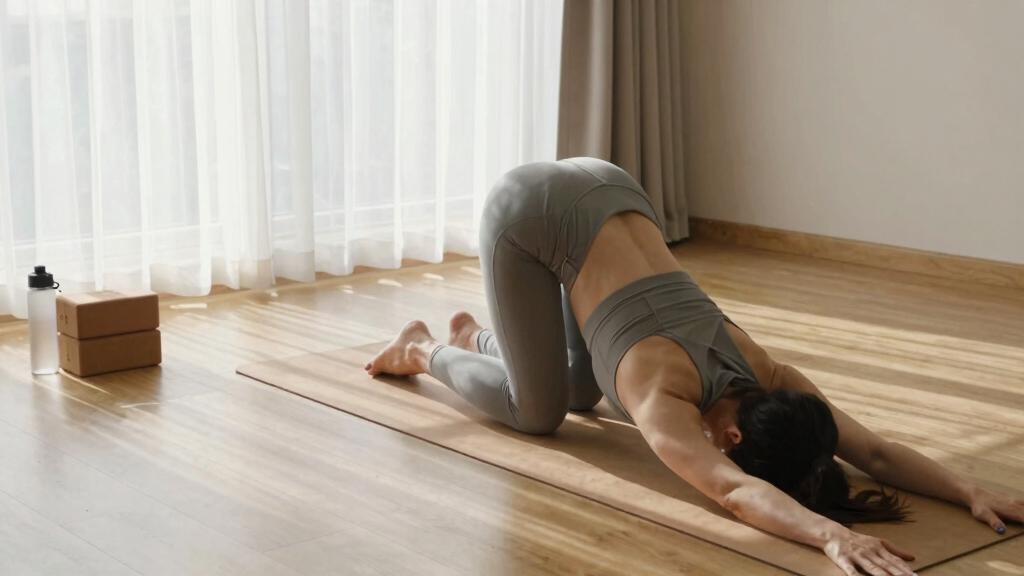
Child’s Pose
Rest safely, calm the mind, and release the back.
Cat-Cow
Move the spine gently and prepare for deeper practice.
Downward Dog
Stretch shoulders, hamstrings, calves, and build stability.
Seated Twist
Release spinal tension and connect breath with movement.
Listen early so you can keep practicing longer.
Motivation rises and falls. The durable approach is flexible: adjust poses, celebrate tiny wins, and treat pain as useful information.
Discomfort means adjust. Pain means stop.
If Forward Fold strains your hamstrings, bend your knees or use a strap. If pain persists, pause and get qualified guidance.
The body-signal spectrum
Use sensation as feedback. Gentle stretch can be useful; sharp, pinching, or worsening pain is a stop sign.
Steady breath, mild stretch, relaxed face.
Tension, shaky breath, or form collapsing.
Sharp pain, numbness, pinching, or joint strain.
Why consistency beats intensity every time.
Small regular efforts create habits that last. You do not need to drown the plant; you only need to keep the soil moist.
Track tiny proof.
A calendar mark, one calmer breath, or holding a pose slightly longer can keep the habit alive.
Progress is cumulative.
Yoga is adaptable for all ages and fitness levels. The first month is about learning your body, not impressing anyone.
Key Takeaways
- Start with 10 minutes daily—consistency outperforms intensity for beginners.
- Focus on core poses like Mountain, Child’s Pose, and Downward Dog to build confidence.
- Prioritize proper alignment and mindful breathing to prevent injury and deepen practice.
- Use short routines at different times of the day to stay motivated and fit yoga into a busy schedule.
- Listen to your body—modify or skip poses that cause discomfort, and celebrate small wins.

Gaiam Essentials Thick Yoga Mat with Easy-Cinch Strap (Green, 10mm)
- Extra-Thick Cushioning: 10mm high-density NBR foam for joint comfort
- Textured Surface for Grip: Reduces slipping during workouts
- Soft, Cushioned Feel: Prioritizes comfort and shock absorption
As an affiliate, we earn on qualifying purchases.
As an affiliate, we earn on qualifying purchases.
How to Start Yoga Without Feeling Overwhelmed
Starting yoga can feel like stepping into a foreign language—lots of poses, terms, and expectations. The secret is to keep it simple. Begin with just 10 minutes a day, focusing on basic poses and breath work. For example, start with a gentle seated stretch and a few deep breaths. Over time, these small steps build confidence and comfort.
Imagine turning on a beginner yoga video that walks you through easy poses like Mountain or Child’s Pose. The key is consistency—doing a little every day beats sporadic, intense sessions that leave you sore and discouraged. Think of your first month as planting seeds: gentle, steady watering leads to growth.

Yoga Blocks 2 Pack, 9x6x3in Pilates Block, Non-Slip Foam Brick for Exercise
- Dimensions: 9x6x3 inches each
- Package Includes: 2 high-density foam blocks
- Versatile Use: Suitable for yoga, pilates, meditation
As an affiliate, we earn on qualifying purchases.
As an affiliate, we earn on qualifying purchases.
The 3 Core Pillars That Make Your First Month Smooth
| Focus Area | Why It Matters | Practical Tip |
|---|---|---|
| Consistency | Builds habit and confidence faster than rare, intense sessions. | Practice 3-5 times weekly, even if only for 10 minutes. |
| Mindfulness & Breath | Reduces stress, improves focus, and deepens the connection to your body. | Start each session with 3 deep breaths, feeling the air fill your belly. |
| Proper Alignment | Prevents injury and ensures you get the most out of each pose. | Use a mirror or record yourself to check your form during poses like Downward Dog. |
This trio acts as your foundation, making every yoga session more effective and enjoyable. Think of them as the pillars holding up your first-month journey.

Trideer Stretching Strap Yoga Strap Physical Therapy for Home Workout, Exercise, Pilates and Gymnastics, 10 Loops Non-Elastic Stretch Bands with Aesthetic Packaging for Women & Men (Black)
- Home Physical Therapy Support: Assists knee, hip, and leg mobility at home
- Non-Elastic for Steady Holds: No rebound or surprise stretch
- Multiple Loops for Easy Grip: Adjust stretch depth and track progress
As an affiliate, we earn on qualifying purchases.
As an affiliate, we earn on qualifying purchases.
Easy Routines That Fit Into Any Busy Day
Time constraints shouldn’t stop you from reaping yoga’s benefits. Here are three routines, each around 10 minutes, designed for busy mornings, lunch breaks, or winding down at night.
- Morning Wake-Up: Gentle stretches like neck rolls, seated side bends, and cat-cow to energize your day.
- Midday Reset: A quick flow of Downward Dog, Warrior I, and seated twists to clear mental fog.
- Evening Relaxation: Restorative poses like Legs-Up-The-Wall and Child’s Pose to wind down.
Try them out when you have a few minutes. The consistency of these small routines creates a ripple effect—your body and mind thank you.

Retrospec Sedona Meditation Cushion, Buckwheat Pillow, Meditation Pillow
- Natural Buckwheat Filling: Supports spine and hips during meditation
- Customizable Firmness: Adjust with removable buckwheat hulls
- Eco-Friendly Cotton Cover: Machine washable and microplastic-free
As an affiliate, we earn on qualifying purchases.
As an affiliate, we earn on qualifying purchases.
The Top 5 Poses Every Beginner Should Master
Focusing on just these five poses during your first month builds a solid foundation. Each one teaches you essential alignment, breath control, and body awareness.
- Mountain (Tadasana): Stand tall, feel the ground under your feet, and breathe into your body’s natural posture. This pose helps you develop awareness of proper alignment, which is crucial for preventing injuries and building confidence in other poses.
- Child’s Pose (Balasana): A restful stretch that calms your mind and relieves tension in your back. It teaches you to listen to your body’s signals and provides a safe resting position during practice.
- Cat-Cow: Move between arching and rounding your back, promoting spinal flexibility. This dynamic movement increases awareness of spinal health and prepares your body for more complex poses.
- Downward Dog: An energizing pose that stretches your shoulders, hamstrings, and calves. It fosters strength and stability while improving circulation and posture awareness.
- Seated Twist: Gently releases tension in your spine and improves digestion. This pose encourages mindful breathing and helps you connect breath with movement, a key aspect of yoga.
Practicing these regularly helps you feel more connected and confident in your body within weeks. Each pose offers specific benefits that contribute to your overall physical and mental well-being, making them essential building blocks for your yoga journey. These poses matter because they target common areas of tension and imbalance, which, if left unaddressed, can lead to discomfort or injury over time. By mastering them early, you create a foundation that supports more advanced poses and fosters a safer, more effective practice. The tradeoff is that focusing on these basics might mean slower progress initially, but it ensures long-term health and confidence—an investment in your yoga future.
How to Keep Your Motivation High in the First Month
Motivation can dip when results aren’t immediate, but a few tricks keep you moving forward. Make yoga a part of your daily routine—like brushing your teeth. Track your progress, even if it’s just a smiley face on a calendar.
Join online groups or find a buddy. Sharing your journey makes it more fun and keeps you accountable. Remember, yoga is about feeling better, not perfecting poses. Celebrate small wins—like holding a pose a little longer or noticing less tension during your day.
Understanding that motivation fluctuates is important—some days you’ll feel inspired, others less so. The key is to develop resilience by recognizing progress in small steps and maintaining a flexible attitude. This approach helps prevent burnout and ensures that yoga becomes a sustainable part of your lifestyle, not a temporary challenge. Developing resilience means accepting that motivation ebbs and flows; it’s normal to have days where practice feels harder or less appealing. The tradeoff is that by cultivating patience and flexibility, you set yourself up for long-term consistency. This mindset prevents discouragement from setbacks and helps you see progress as cumulative rather than immediate, reinforcing your commitment over time.
What to Do When Pain or Discomfort Shows Up
Pain during yoga is a warning sign—don’t push through it. If a pose causes discomfort, gently adjust or modify it. For example, if Forward Fold strains your hamstrings, bend your knees slightly or use a strap.
Listen to your body. If pain persists, pause and reassess. Consulting a qualified instructor can help you correct your form and avoid injury. Recognizing the difference between discomfort that signals a need to adjust and pain that indicates injury is crucial for a safe practice. Prioritizing safety means understanding your limits and respecting them, which ultimately allows you to practice more consistently and confidently. The tradeoff here is that avoiding pushing through pain might slow progress initially, but it greatly reduces the risk of injury that could sideline you long-term. Building awareness of your body’s signals also enhances your ability to adapt poses safely, fostering a sustainable, injury-free practice that supports ongoing growth and enjoyment.
Why Consistency Beats Intensity Every Time
Practicing a little each day beats doing an intense session once a week. According to yogafitdaily, even just 10 minutes daily boosts flexibility, strength, and mental clarity faster than sporadic, long practices.
It’s like watering a plant—you don’t need to drown it, just keep the soil moist. Small, regular efforts create habits that last, turning yoga from a chore into a natural part of your life. The tradeoff here is that while quick, intense sessions may seem efficient, they often lead to burnout or injury if done excessively. Conversely, consistent daily practice fosters not only physical adaptation but also mental discipline, making yoga a sustainable part of your identity. Over time, this consistency builds resilience, mental focus, and physical adaptability, which are key for integrating yoga into your lifestyle permanently, rather than relying on sporadic bursts of effort that can be discouraging or unsustainable.
Frequently Asked Questions
How do I stay motivated to practice every day?
Set small, achievable goals and track your progress. Incorporate yoga into your daily routine like brushing your teeth, and join online groups or find a buddy for accountability. Focus on how yoga makes you feel rather than just the poses.
What if I have limited space or equipment?
Minimal space and a yoga mat are enough to start. Use common household items like a sturdy chair or towel for modifications. Many routines require no equipment at all, making it easy to practice anywhere.
Can I do yoga if I have injuries or health issues?
Yes, but consult your healthcare provider first. Choose gentle routines and modify poses as needed. Many online classes specify routines for injuries or limitations, so look for those tailored to your needs.
How long before I see results?
Most beginners notice increased flexibility and reduced stress within a few weeks of consistent practice—often 3-4 weeks. The key is regularity, not duration. Even 10 minutes a day can make a big difference.
Conclusion
Starting yoga doesn’t have to be overwhelming. With a simple plan, consistent effort, and patience, your first month can feel surprisingly smooth—and even enjoyable. When you focus on regular, mindful practice, you’re laying the foundation for a lifelong journey of health and calm.
Remember, yoga is about feeling better, not perfect. Embrace the small wins, stay curious, and let your practice grow naturally. Your mat awaits—ready when you are.