
TL;DR

Get workout gear delivered free with Prime
- Fast, free delivery on millions of items
- Prime Video, Amazon Music and more included
- Member-only deals all year
Personal trainer Jill Brown, 59, told Fit&Well that she avoids heavy lifting because of injuries and uses lighter resistance with higher repetitions. She recommends a 30-minute, six-exercise band workout for beginners, starting with six to eight repetitions and progressing gradually while maintaining good form.
Jill Brown, a 59-year-old personal trainer and Pilates instructor, has shared a 30-minute resistance-band workout for beginners, saying she no longer lifts heavy weights because of injuries. In an interview with Fit&Well, Brown recommended starting with six to eight repetitions of each exercise and increasing gradually, offering an alternative for people who are new to strength training or prefer not to use heavy equipment.
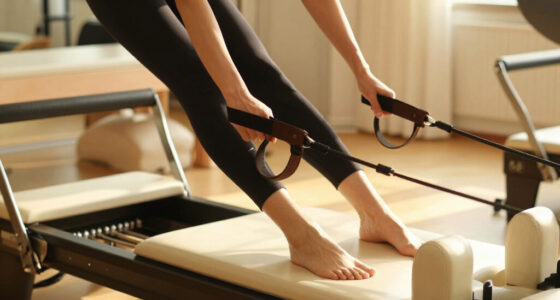
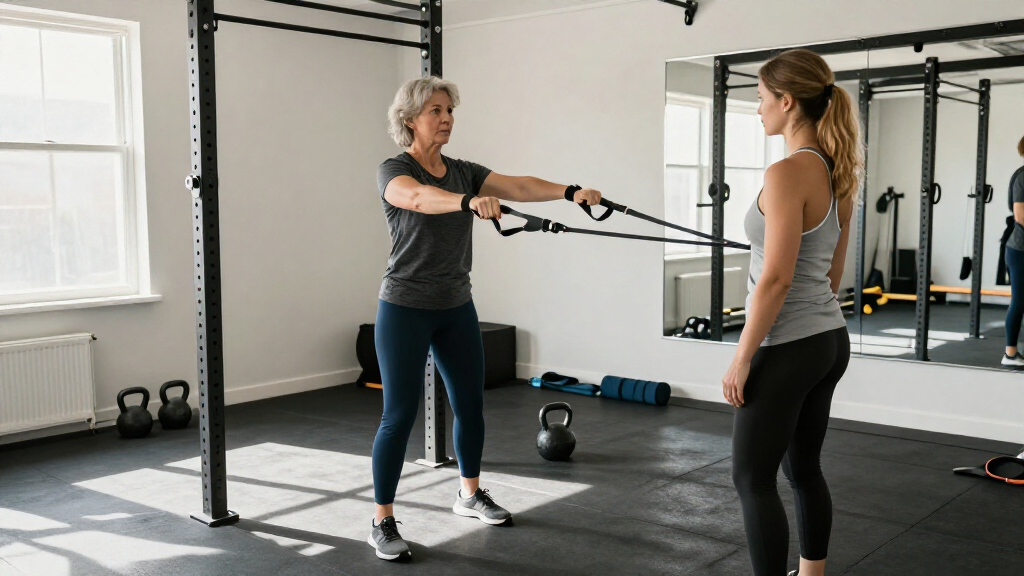
The routine has six movements: squats, lunges, bent-over rows, lat pulls, a child’s-pose-to-kneeling push-up and a banded floor press. Brown’s prescribed starting range is two to three sets of six to eight repetitions for each exercise; lunges are performed for six to eight repetitions on each side. It requires a long resistance band and a short loop band.
Brown told Fit&Well that injuries are the reason she avoids heavy lifting. She said research indicates muscle can grow with lighter to moderate weights, and described raising her repetitions as a way to make lighter resistance more challenging. She said she personally favors 20 repetitions, but advised beginners not to begin at that level.
Her guidance is to begin with as many repetitions as can be completed with good form, record the number and add repetitions over time. Brown gave a plank as an example of gradual progression: a person able to hold one for 20 seconds could start there, then add five seconds the following week. The progression examples are advice from Brown, not a guarantee of a particular result.
A Lower-Equipment Entry to Strength Training
The routine gives readers a practical option for beginning resistance exercise at home, using bands rather than gym machines or heavy dumbbells. That may suit people who lack equipment, have not exercised recently or are uncomfortable with heavier loads—the barriers described in the Fit&Well report. The exercises cover several movement patterns, including squatting, stepping, pulling and pushing.
Brown’s approach also emphasizes adapting effort over time rather than treating a high repetition count as a beginner requirement. Her instruction to stop at the number manageable with good form is central to the recommendation. However, the report does not provide independent testing of the routine or evidence that this particular set of exercises produces specific health outcomes.
Products Worth Considering

Levoit Core 400S-P Smart Air Purifier for Large Rooms

Philips Sonicare 5950 Rechargeable Electric Toothbrush with 2 Brush Heads, Pink

BowFlex Results Series SelectTech Adjustable Dumbbells, Pair
As an affiliate, we earn on qualifying purchases.
Brown’s Injury-Led Training Approach
The Fit&Well report identifies Brown as a board-certified health and wellness coach, personal trainer and Pilates instructor. It says she described her training in a workout diary and explained that injuries have led her away from heavy lifting. Her comments reflect her own training choices and coaching advice; the source does not specify the injuries involved.
The article frames resistance-band training as an option for people who may be recovering from an injury, returning after a break or avoiding the cost and space requirements of a gym. It does not say that bands are appropriate for every injury or that they replace individualized medical or rehabilitation advice.
“I don’t lift heavy because of injuries.”
— Jill Brown, speaking to Fit&Well
Limits of the Published Guidance
The source does not state when the report was published, identify Brown’s injuries or provide details about the research she cited. It also does not report results from a trial of this exact workout, so readers should not treat the routine as proven to deliver a particular strength or muscle gain.
Brown’s routine is presented as general beginner advice, but the article does not set out modifications for specific health conditions, pain, balance concerns or different levels of mobility. People with an injury or underlying health condition may need advice from a qualified clinician or exercise professional before beginning. The report also does not specify rest periods between sets or how to select band resistance.
Progress Gradually and Check Form
Brown’s suggested next step is to try a manageable number of repetitions, note the starting point and add some over subsequent weeks while keeping technique controlled. Beginners can use the listed six-to-eight-repetition range as a starting guide, rather than attempting her personal preference of 20 repetitions from the outset. The report does not announce a follow-up study, program or scheduled update.
Anyone trying the workout should stop if an exercise causes pain and seek qualified guidance when injury or health concerns affect movement. The source provides no individualized assessment, so the routine’s suitability will depend on the person and the resistance band used.
Key Questions
Who is Jill Brown?
Brown is 59 and is described by Fit&Well as a board-certified health and wellness coach, personal trainer and Pilates instructor. She told the publication she avoids heavy weights because of injuries.
What exercises are in the workout?
The six exercises are squats, lunges, bent-over rows, lat pulls, child’s-pose-to-kneeling push-ups and banded floor presses. The routine uses long and short loop resistance bands.
How many repetitions should beginners do?
Brown recommends starting with six to eight repetitions and using a number that can be completed with good form. Her personal preference for 20 repetitions is not her suggested starting point for beginners.
Should someone with an injury try the routine?
The report does not establish that the workout is safe or suitable for any particular injury. Anyone recovering from an injury or managing a health condition should seek guidance from a qualified clinician or exercise professional before starting.
Source: rss