The best yoga mats for hot yoga must stay dependable as sweat builds without sacrificing balance or becoming difficult to clean. I rank the Gaiam Dry-Grip Yoga Mat as the best overall because its sweat-focused surface fits heated practice better than the lineup’s general-purpose mats. The Liforme Classic is my premium pick for buyers who want stronger positioning guidance, while the IUGA 6mm mat offers the best value for those balancing grip, cushioning, and price. The main tradeoffs are wet traction versus easy cleaning, cushioning versus stability, and premium construction versus portability and cost. Continue reading for the full ranking logic, buyer-specific recommendations, and the factors that separate a true hot-yoga mat from a comfortable exercise mat.

Get workout gear delivered free — and shop member deals
- Fast, free delivery on millions of items
- Access to Prime Big Deal Days deals on October 6–7
- Prime Video, Amazon Music and more included
Complete the kit


Key Takeaways
- Gaiam Dry-Grip leads the ranking because a surface designed around perspiration matters more in hot yoga than extra padding or decorative styling.
- Liforme Classic earns the premium position through its combination of strong grip and alignment markings, but its higher price is harder to justify for occasional practice.
- IUGA is the value standout: its 6mm profile gives newer practitioners more cushioning than Liforme or Gaiam Classic Print without moving into half-inch territory.
- The Gaiam options split into clear specialties: 4mm favors balance, 5mm offers a middle ground, and 6mm models prioritize comfort at the cost of a firmer connection to the floor.
- Retrospec Solana provides the most cushioning, yet its half-inch thickness places it last for balance-heavy hot flows and makes it better suited to sensitive joints or floor exercises.
| Gaiam Reversible 6mm Yoga Mat |  | Best Reversible Pick | Dimensions: 68 x 24 inches | Material: PVC | Thickness: 6mm | VIEW LATEST PRICE | See Our Full Breakdown |
| Gaiam Dry-Grip Yoga Mat |  | Best Overall | Material: PVC | Dimensions: 68 x 24 inches | Thickness: 5mm | VIEW LATEST PRICE | See Our Full Breakdown |
| Gaiam Essentials 1/4 Inch Yoga & Pilates Mat |  | Best for Taller Beginners | Material: PVC | Dimensions: 72 x 24 inches | Thickness: 1/4 inch (6mm) | VIEW LATEST PRICE | See Our Full Breakdown |
| Gaiam Classic Print 4mm Non-Slip Mat |  | Best Thin and Lightweight Pick | Length: 68 inches | Width: 24 inches | Thickness: 4mm | VIEW LATEST PRICE | See Our Full Breakdown |
| Pro Non Slip Yoga Mat |  | Best Eco-Conscious Grip | Base material: Sustainably harvested tree rubber | Surface material: Non-slip PU | Core: Reinforced mesh | VIEW LATEST PRICE | See Our Full Breakdown |
| Retrospec Solana Yoga Mat Thick 1/2in Non-Slip Workout Mat with Nylon Strap – 72x24in |  | Best Maximum-Cushioning Pick | Length: 72 inches | Width: 24 inches | Thickness: 1/2 inch | VIEW LATEST PRICE | See Our Full Breakdown |
| Liforme Classic Yoga Mat – Patented Alignment Design, Ultimate Grip |  | Best for Alignment-Focused Practice | Length: 72.8 inches | Width: 26.8 inches | Thickness: 0.16 inches (4.2mm) | VIEW LATEST PRICE | See Our Full Breakdown |
| IUGA Thick Non-Slip Yoga Mat 72x24x6mm |  | Best Lightweight Pick | Length: 72 inches | Width: 24 inches | Thickness: 6mm | VIEW LATEST PRICE | See Our Full Breakdown |
| Gaiam Thick Yoga Mat with Carrying Strap |  | Best for Gentle Heated Classes | Thickness: 10mm | Material: NBR foam | Surface: Textured slip-resistant finish | VIEW LATEST PRICE | See Our Full Breakdown |
| Gaiam Yoga Mat – Premium 5mm Cork and TPE Exercise Mat |  | Best Natural-Surface Pick | Length: 68 inches | Width: 24 inches | Thickness: 5mm | VIEW LATEST PRICE | See Our Full Breakdown |
| yoga mats for hot yoga | Thickness | Material | Surface | Length |
|---|---|---|---|---|
| Gaiam Reversible 6mm Yoga Mat | 6mm | PVC | Textured non-slip surfaces | — |
| Gaiam Dry-Grip Yoga Mat | 5mm | PVC | — | — |
| Gaiam Essentials 1/4 Inch Yoga | 1/4 inch (6mm) | PVC | Textured non-slip surface | — |
| Gaiam Classic Print 4mm Non-Sl | 4mm | PVC-free, non-toxic material | Textured non-slip surface | 68 inches |
| Pro Non Slip Yoga Mat | 5mm | — | — | — |
| Retrospec Solana Yoga Mat Thic | 1/2 inch | Durable BPA-free foam | Non-slip texture | 72 inches |
| Liforme Classic Yoga Mat | 0.16 inches (4.2mm) | Eco-polyurethane and rubber | — | 72.8 inches |
| IUGA Thick Non-Slip Yoga Mat 7 | 6mm | SGS-certified TPE | — | 72 inches |
| Gaiam Thick Yoga Mat with Carr | 10mm | NBR foam | Textured slip-resistant finish | — |
| Gaiam Yoga Mat | 5mm | — | — | 68 inches |
More Details on Our Top Picks
Gaiam Reversible 6mm Yoga Mat
I rank the Gaiam Reversible 6mm Yoga Mat as the most versatile choice here because its two textured sides let buyers switch surfaces when one feels less secure. The 6mm cushioning is kinder to knees than the 4mm Gaiam Classic Print, making it better for floor poses and slower hot-yoga sessions. It does not manage perspiration as directly as the Gaiam Dry-Grip, though, so heavy sweaters may still need a towel once moisture builds. Its extra padding can also make standing balances feel less planted. I see this as a flexible crossover mat rather than a dedicated sweat specialist: two usable surfaces, comfortable support, and low carrying burden are appealing, but the PVC construction and initial odor weaken its case for environmentally focused buyers.
Pros:- Reversible construction provides two textured practice surfaces
- 6mm padding offers substantial support for knees and wrists
- Lightweight build is easier to transport than many thick mats
- Downloadable yoga workout adds value for newer practitioners
Cons:- Textured PVC lacks the dedicated moisture-wicking performance of the Gaiam Dry-Grip
- 6mm cushioning may feel unstable during demanding balance poses
- PVC construction and initial odor will deter some buyers
Best for: Hot-yoga newcomers who want extra joint cushioning and two grip textures for yoga, Pilates, and home workouts
Not ideal for: Heavy sweaters who need a moisture-wicking surface or balance-focused practitioners who prefer a firmer base
- Dimensions:68 x 24 inches
- Material:PVC
- Thickness:6mm
- Reversible:Yes
- Surface:Textured non-slip surfaces
- Included:Downloadable yoga workout
Our verdict“My pick for buyers who value reversible versatility and joint comfort more than specialized wet-grip performance.”
Gaiam Dry-Grip Yoga Mat
The Gaiam Dry-Grip Yoga Mat takes my top position because its moisture-wicking surface addresses the main problem in hot yoga: maintaining traction as perspiration accumulates. Its 5mm thickness offers a more balanced mix of cushioning and stability than the softer 6mm Gaiam Reversible mat. Compared with the Pro Non Slip Yoga Mat, this model is narrower, heavier, and made from PVC, yet its sweat-focused surface and established care guidance make it the clearer all-around hot-class choice. The 4.25-pound weight is manageable but not especially light, while the initial odor requires several days of airing. Extended sunlight can also fade or embrittle the material. I would prioritize its wet-session grip over its portability or environmental credentials, particularly for frequent Bikram and Vinyasa classes.
Pros:- Moisture-wicking surface is tailored to sweaty hot-yoga sessions
- 5mm profile balances joint support with standing stability
- Works across Bikram, Vinyasa, and higher-intensity floor exercise
- Made without several listed phthalates and latex
Cons:- 4.25-pound weight is heavier than the 2.5-pound Pro Non Slip Yoga Mat
- PVC construction has weaker environmental appeal than tree rubber
- Initial odor and sensitivity to prolonged sunlight require extra care
Best for: Frequent Bikram, heated Vinyasa, and high-intensity practitioners who prioritize dependable grip as sweating increases
Not ideal for: Eco-focused buyers or commuters who want a lighter natural-rubber mat without an airing-out period
- Material:PVC
- Dimensions:68 x 24 inches
- Thickness:5mm
- Weight:4.25 pounds
- Colors:Black, blue, purple
- Care:Spot clean with mild detergent and dry flat
- Free of:Latex, DEHP, DBP, BBP, DINP, DIDP, and DNOP
Our verdict“I recommend this first for regular hot-yoga students who put moisture control and balanced cushioning ahead of low weight.”
Gaiam Essentials 1/4 Inch Yoga & Pilates Mat
I place the Gaiam Essentials 1/4 Inch Mat in the beginner-friendly slot because its 72-inch length, forgiving padding, and included strap remove several practical barriers to attending class. It gives taller practitioners four more inches of room than the Gaiam Dry-Grip and Gaiam Classic Print. The 6mm cushion also reduces pressure during kneeling poses, though that softness can make single-leg balances less steady. Its textured surface supplies general traction, but it is not described as moisture-wicking; compared with the Gaiam Dry-Grip, a towel may become necessary sooner in a very sweaty class. At 3.5 pounds, it remains reasonably portable without being the lightest option. I view its extra practice length and carrying strap as stronger selling points than its hot-yoga specialization.
Pros:- 72-inch length gives taller users more usable space
- 6mm thickness cushions knees, wrists, and seated poses
- Textured surface supplies dependable general-purpose traction
- Included carrying strap simplifies trips to class
Cons:- Surface is not specifically described as moisture-wicking
- Thick padding can reduce feedback and stability in balance poses
- PVC construction is less appealing for environmentally focused buyers
Best for: Taller beginners who want knee-friendly padding, extra practice length, and an included strap for occasional heated classes
Not ideal for: Advanced balance practitioners and very heavy sweaters who need a firmer, moisture-managing surface
- Material:PVC
- Dimensions:72 x 24 inches
- Thickness:1/4 inch (6mm)
- Weight:3.5 pounds
- Colors:Classic colors
- Surface:Textured non-slip surface
- Included:Carrying strap
Our verdict“My choice for taller newcomers who favor cushioning and easy transport over dedicated sweat-management technology.”
Gaiam Classic Print 4mm Non-Slip Mat
The Gaiam Classic Print 4mm Mat earns my lightweight slot for practitioners who dislike the muted floor feedback of thick foam. Its slimmer profile should feel more planted during standing sequences than the 6mm Gaiam Essentials, while the textured surface provides traction without adding bulk. It also uses a PVC-free, non-toxic material, giving it broader appeal than the PVC-based Gaiam Dry-Grip. The compromise is reduced cushioning for sensitive knees and wrists, and its surface is not described as moisture-wicking. Heavy sweaters may need a towel sooner than they would on the Dry-Grip or Pro Non Slip mat. An initial odor and airing period also make it less convenient straight from the package. I favor this model for firmer floor connection and portability, not maximum sweat absorption.
Pros:- 4mm profile provides firmer feedback during standing poses
- Lightweight construction suits regular studio travel
- PVC-free, non-toxic material broadens its appeal
- Downloadable yoga class helps new practitioners get started
Cons:- Offers less joint protection than the 6mm Gaiam mats
- No dedicated moisture-wicking layer for very sweaty sessions
- Needs airing after unwrapping because of the initial odor
Best for: Balance-focused practitioners and studio commuters who want a firmer, lightweight PVC-free mat for moderately sweaty classes
Not ideal for: Buyers with sensitive joints or heavy perspiration who need thicker cushioning and dedicated moisture control
- Length:68 inches
- Width:24 inches
- Thickness:4mm
- Material:PVC-free, non-toxic material
- Surface:Textured non-slip surface
- Portability:Lightweight
- Included:Downloadable yoga class
Our verdict“I favor this for mobile practitioners who want a firmer PVC-free mat and can trade some cushioning for stability.”
Pro Non Slip Yoga Mat
I rank the Pro Non Slip Yoga Mat as the strongest eco-minded alternative because it combines a sweat-friendly PU surface with sustainably harvested tree rubber rather than PVC. At 72 by 26 inches, it supplies more practice space than the Gaiam Dry-Grip, while its listed 2.5-pound weight is also much easier to carry. The reinforced mesh core adds tear resistance, and 5mm of padding preserves useful joint support without reaching the softer feel of a 6mm mat. There are tradeoffs: it lacks alignment markings, color choice is unclear, and the surface may become slippery if sweat residue is not wiped away. Compared with the Gaiam Dry-Grip, it offers more width and lower weight, but asks for more attentive cleaning to maintain traction.
Pros:- PU surface provides strong traction for hot yoga and intense workouts
- 72-by-26-inch footprint offers more room than standard Gaiam mats
- Tree-rubber base avoids PVC and harsh chemicals
- 2.5-pound weight and included strap support easy transport
Cons:- Grip may deteriorate when sweat residue is left on the surface
- No alignment markings for practitioners who rely on visual positioning cues
- Limited color information makes appearance difficult to judge before purchase
Best for: Eco-minded hot-yoga practitioners who want a wider, lighter mat with strong PU grip and moderate cushioning
Not ideal for: Buyers who want alignment guides, broad color choice, or a low-maintenance surface that tolerates sweat residue
- Base material:Sustainably harvested tree rubber
- Surface material:Non-slip PU
- Core:Reinforced mesh
- Dimensions:72 x 26 inches
- Thickness:5mm
- Weight:2.5 pounds
- Color:Not specified
- Included:Carrying strap
Our verdict“My eco-conscious pick for buyers who want roomy, portable wet grip and are willing to clean the surface regularly.”
Retrospec Solana Yoga Mat Thick 1/2in Non-Slip Workout Mat with Nylon Strap – 72x24in
I rank the Retrospec Solana as the cushioning specialist because its 1/2-inch foam provides more padding than the 10mm Gaiam Thick Yoga Mat and far more than the 4.2mm Liforme Classic. That extra depth can make kneeling poses and floor sequences easier on sensitive joints. The compromise is reduced connection to the floor: balancing postures may feel less steady, and thick foam is bulkier to carry even with the included strap. Its textured, non-slip surface provides basic traction, but it lacks the sweat-responsive cork or polyurethane surface found on stronger hot-yoga picks. I would choose it for comfort-led sessions with moderate perspiration, while frequent heated-class attendees may need a towel to manage moisture. An initial foam odor is another drawback for odor-sensitive buyers.
Pros:- Half-inch foam supplies substantial joint cushioning
- Textured surface supports stability during lower-intensity poses
- Durable BPA-free foam suits frequent home use
- Included nylon strap simplifies carrying and storage
Cons:- Deep cushioning can feel unstable during standing balances
- Foam surface may require a towel when perspiration becomes heavy
- Material may have an odor when first unpacked
Best for: Hot-yoga beginners with sensitive knees or wrists who prioritize substantial padding during slower classes
Not ideal for: Advanced practitioners who need a firm base and strong wet-surface traction for balance-heavy heated flows
- Length:72 inches
- Width:24 inches
- Thickness:1/2 inch
- Material:Durable BPA-free foam
- Surface:Non-slip texture
- Included Accessory:Nylon carrying strap
Our verdict“I recommend the Retrospec Solana for cushioning-first buyers who accept extra bulk and less stability in exchange for softer joint support.”
Liforme Classic Yoga Mat – Patented Alignment Design, Ultimate Grip
The Liforme Classic Yoga Mat earns this position by combining a printed alignment system with a grippy eco-polyurethane surface. The markings give buyers visible reference points for hands, feet, and midline placement, a benefit the IUGA Thick and Retrospec Solana do not offer. At 72.8 by 26.8 inches, it also gives broader or taller practitioners more working room than the standard 72-by-24-inch IUGA. Its 4.2mm profile feels firmer and more grounded than thick foam alternatives, which helps during balance sequences but provides less relief for tender knees. I see the high price as the largest barrier, followed by its relatively heavy construction and limited color selection. Still, buyers refining technique in sweaty classes receive a more specialized practice surface than they would from a general-purpose exercise mat.
Pros:- Patented alignment markings support consistent hand and foot placement
- Eco-polyurethane and rubber construction provides strong grip
- Extra-long and wide format offers more practice space
- Free yoga bag adds carrying convenience
Cons:- Premium pricing places it above general-purpose mats
- Heavier construction is less convenient for long commutes
- Firm 4.2mm profile offers less knee cushioning than thicker foam mats
Best for: Technique-focused hot-yoga practitioners who want placement guides, generous dimensions, and a firm, high-grip surface
Not ideal for: Budget buyers or practitioners with sensitive joints who need deep cushioning and a light mat for frequent commuting
- Length:72.8 inches
- Width:26.8 inches
- Thickness:0.16 inches (4.2mm)
- Material:Eco-polyurethane and rubber
- Alignment Feature:Patented printed guidance system
- Recommended Use:Hot yoga and general yoga
- Included Accessory:Yoga bag
Our verdict“I favor the Liforme Classic for serious hot-yoga students who value alignment feedback and grip more than low cost or plush padding.”
IUGA Thick Non-Slip Yoga Mat 72x24x6mm
I place the IUGA Thick Non-Slip Yoga Mat first for portability because its 2-pound weight and carrying strap make regular studio trips easier. The 6mm TPE layer offers more cushioning than the 4.2mm Liforme Classic while retaining a firmer feel than the half-inch Retrospec Solana. A textured top and bone-pattern underside address two different problems: surface traction for the practitioner and floor grip beneath the mat. Even so, I would not treat it as the strongest choice for very sweaty sessions; its textured TPE surface is less specialized for moisture than the cork-topped Gaiam 5mm mat. Cleaning also requires care, and prolonged sun exposure can damage the material. This is the balanced commuter pick, pairing moderate joint support with a weight that is manageable on public transport or longer walks.
Pros:- Two-pound construction is easy to carry
- Double-sided textures support both pose and floor grip
- Six-millimeter thickness balances cushioning with stability
- SGS-certified TPE provides a non-toxic material option
Cons:- TPE surface is less sweat-focused than cork or polyurethane alternatives
- Cleaning methods must be gentle to avoid material damage
- Prolonged sunlight can degrade the mat
Best for: Studio commuters who want a two-pound mat with moderate cushioning for warm or moderately sweaty yoga classes
Not ideal for: Heavy sweaters seeking a moisture-responsive surface or outdoor practitioners who routinely leave a mat in direct sunlight
- Length:72 inches
- Width:24 inches
- Thickness:6mm
- Material:SGS-certified TPE
- Weight:2 pounds
- Top Surface:Textured
- Underside:Bone-pattern anti-slip texture
- Included Accessory:Carrying strap
Our verdict“I recommend the IUGA for commuters who want a light, cushioned mat and can accept less specialized traction during very sweaty classes.”
Gaiam Thick Yoga Mat with Carrying Strap
The Gaiam Thick Yoga Mat fits slower heated sessions because its 10mm NBR foam softens kneeling, seated stretches, and floor-based sequences without reaching the full half-inch depth of the Retrospec Solana. That makes it slightly less plush but potentially easier to manage. Compared with the 6mm IUGA, it gives sore joints more protection, though the softer foundation can wobble beneath single-leg poses and fast changes of position. The textured surface supplies everyday slip resistance, but NBR foam is not built around sweat absorption; I would pair it with a yoga towel in a humid studio. Its light, portable design and easy-cinch strap suit buyers moving between home and class. Buyers sensitive to smells should also allow time for the initial foam odor to dissipate before taking it into a crowded room.
Pros:- Ten-millimeter NBR foam cushions knees and other pressure points
- Textured surface adds grip during gentle movement
- Light design and easy-cinch strap support studio transport
- Surface is simple to wipe clean after class
Cons:- Soft foam can reduce stability during balance poses
- NBR surface may need a towel under heavy perspiration
- Initial foam odor may bother scent-sensitive buyers
Best for: Practitioners attending gentle hot yoga, restorative sessions, or stretch-focused classes who need generous joint padding
Not ideal for: Fast-flow students and balance-focused practitioners who need a firm, sweat-responsive platform
- Thickness:10mm
- Material:NBR foam
- Surface:Textured slip-resistant finish
- Cushioning Level:Extra thick
- Recommended Activities:Yoga, Pilates, stretching, and low-impact exercise
- Portability:Lightweight design
- Included Accessory:Easy-cinch carrying strap
Our verdict“I would choose this Gaiam mat for joint-friendly, slower sessions, not for demanding hot flows where firmness and wet grip take priority.”
Gaiam Yoga Mat – Premium 5mm Cork and TPE Exercise Mat
I give the Gaiam Cork and TPE Yoga Mat the natural-surface role because its cork top responds well to warm, damp practice, setting it apart from the foam-based Retrospec Solana and Gaiam Thick mats. Cork also resists lingering odors, a useful outcome for buyers attending several heated classes each week. The 5mm profile offers a middle ground: more joint protection than the 4.2mm Liforme Classic, yet a steadier base than deeply cushioned foam. Its 68-inch length is the main limitation, especially beside the 72.8-inch Liforme, and taller practitioners may run short of space. The surface can also soften when damp, which may reduce the crisp stability some balance-heavy flows demand. I rank it highly for sweaty practice, but buyers seeking alignment markings or extra room will find Liforme more purpose-built.
Pros:- Cork top provides strong traction in warm, damp conditions
- Natural surface resists sweat-related odors
- Five-millimeter thickness balances joint support and floor feedback
- TPE backing helps the mat stay planted
Cons:- Sixty-eight-inch length may feel cramped for taller users
- Cork surface may soften and feel less stable when damp
- Natural-material construction may cost more than basic foam options
Best for: Average-height hot-yoga regulars who want a cork surface, moderate cushioning, and resistance to sweat-related odors
Not ideal for: Tall practitioners or balance-focused students who need extra length and a consistently firm surface when damp
- Length:68 inches
- Width:24 inches
- Thickness:5mm
- Top Material:Natural cork
- Bottom Material:TPE
- Surface Properties:Sweat-resistant and odor-resistant
- Recommended Activities:Hot yoga, general yoga, Pilates, and floor workouts
Our verdict“I recommend this Gaiam cork mat for sweat-prone, average-height practitioners who prefer natural texture over maximum space or firmness.”
How We Picked
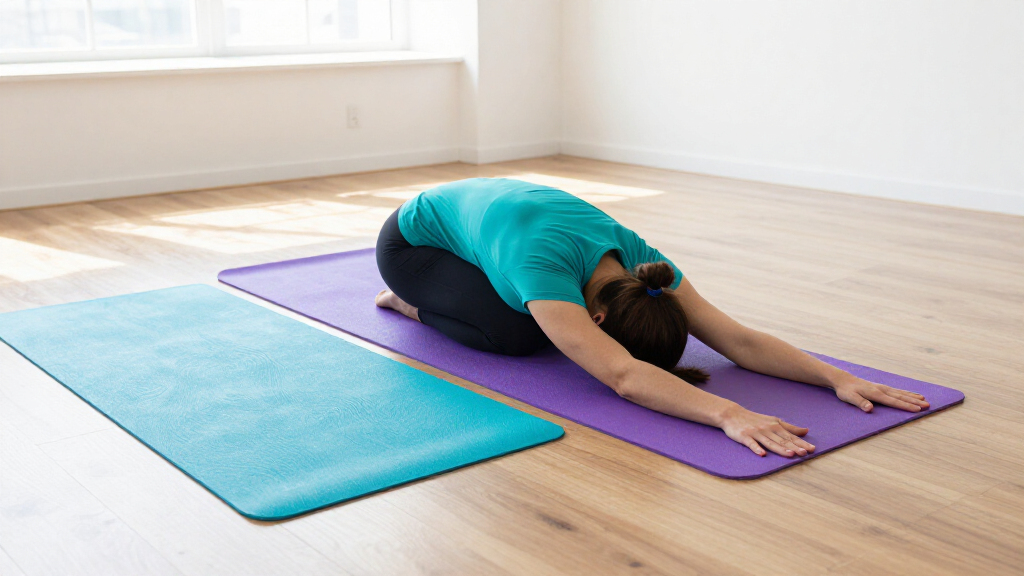
I ranked these mats specifically for heated, sweat-heavy practice rather than general stretching or Pilates. Grip as moisture builds received the greatest weight, followed by stability in standing poses and enough cushioning for knees and wrists. I also compared thickness, usable dimensions, cleaning demands, portability, and value. Purpose-built hot-yoga features ranked above added softness because a plush mat can still be a poor choice when balance and wet traction drive the buying decision.
That framework places the Gaiam Dry-Grip first as Best Overall, followed by Liforme Classic as Best Premium and IUGA 6mm as Best Value. The Pro Non Slip mat takes Best Home-Gym Crossover, Gaiam Reversible 6mm takes Best Two-Sided Option, Gaiam Premium 5mm takes Best Cushioning-and-Stability Balance, and Gaiam Classic Print 4mm takes Best Lightweight Pick. Gaiam Essentials 6mm is Best for Beginners, Gaiam Thick with Carrying Strap is Best for Cushioned Portability, and Retrospec Solana is Best for Maximum Joint Padding. The lower-ranked mats are not automatically lower-quality products; their thickness, portability, or all-purpose design simply fits hot yoga less precisely.
| yoga mats for hot yoga | Material | Surface |
|---|---|---|
| Gaiam Reversible 6mm Yoga Mat | PVC | Textured non-slip surfaces |
| Gaiam Dry-Grip Yoga Mat | PVC | — |
| Gaiam Essentials 1/4 Inch Yoga | PVC | Textured non-slip surface |
| Gaiam Classic Print 4mm Non-Sl | PVC-free, non-toxic material | Textured non-slip surface |
| Pro Non Slip Yoga Mat | — | — |
| Retrospec Solana Yoga Mat Thic | Durable BPA-free foam | Non-slip texture |
| Liforme Classic Yoga Mat | Eco-polyurethane and rubber | — |
| IUGA Thick Non-Slip Yoga Mat 7 | SGS-certified TPE | — |
| Gaiam Thick Yoga Mat with Carr | NBR foam | Textured slip-resistant finish |
| Gaiam Yoga Mat | — | — |
Factors to Consider When Choosing Yoga Mats For Hot Yoga
I would choose a hot-yoga mat by starting with sweat behavior, then narrowing the field by thickness, cleaning needs, dimensions, and budget. A mat that feels grippy in a cool room may act very differently once moisture reaches the surface. The sections below explain the tradeoffs that product listings often leave unclear.
Match the Grip System to How Much You Sweat
Dry traction and wet traction are not the same, so a generic nonslip label reveals little about performance during a heated class. Some surfaces rely on texture, while absorbent or moisture-responsive layers become more useful as perspiration increases. If sweat pools on top rather than spreading or absorbing, even an aggressively textured mat can feel slick. I favor a hot-yoga-specific surface for heavy sweaters because it reduces reliance on constant towel adjustments. Light sweaters may prefer a closed, easier-to-wipe surface paired with a small hand towel. Buyers unsure of their sweat level should choose a mat that works with a full-length towel rather than assuming one surface will handle every class.
Balance Cushioning Against Standing Stability
Thickness changes how securely the feet meet the floor, not just how comfortable the knees feel. Mats around 4mm usually give clearer feedback in balancing poses, while 5mm and 6mm options soften pressure during kneeling work. A half-inch mat can feel pleasant during floor exercises but may compress unevenly under one foot during a standing sequence. I view 5mm as the practical middle ground for mixed practice, with 6mm better for buyers whose joints need extra support. Practitioners who already use a folded towel beneath the knees may gain more from a thinner, steadier mat. Extra padding also increases rolled size and weight, which matters when walking or cycling to class.
Plan for Cleaning and Drying Between Classes
Hot-yoga mats collect more moisture than mats used for gentle practice, making maintenance part of the purchase decision. A surface that absorbs sweat may deliver better traction, yet it often needs more drying time than a wipe-clean closed surface. Rolling any mat while damp can trap odor and shorten its useful life. I would check the maker’s cleaning directions before using vinegar, essential oils, disinfectant, or a washing machine because those methods can damage coatings or adhesives. Buyers attending frequent classes benefit from a surface that can dry fully overnight and a storage spot with airflow. A towel can reduce direct sweat exposure, but it adds laundry and may shift unless it fits the mat well.
Check Length, Width, and Rolled Size
A standard 68-inch mat may feel short for taller practitioners during savasana, lunges, or wide-position sequences. A 72-inch model offers more room without occupying as much studio space as an oversized mat. Width also affects comfort, though a very wide mat may crowd neighboring students in a busy class. I recommend comparing body height with the mat’s usable length rather than relying on a one-size-fits-all label. Rolled dimensions matter just as much for commuters because thick mats can be awkward even when a strap is included. Buyers who practice only at home can prioritize space and padding, while studio regulars may value a lighter roll over another millimeter of cushioning.
Know When Paying More Changes the Practice
A higher price makes the most sense when it buys better sweat management, durable grip, or useful alignment guidance. Those gains have more value for frequent practitioners than for someone attending one heated class each month. Budget mats can still work well when paired with a towel, cleaned promptly, and replaced once the surface begins to smooth out. I would not pay extra solely for prints, color choices, or thickness if the mat lacks a clear wet-grip advantage. Premium models also tend to hurt more if lost, damaged, or left at a studio, making usage frequency and travel habits part of the value equation. For new practitioners, a midpriced mat can reveal whether hot yoga becomes a lasting routine before a larger investment.
Frequently Asked Questions
Do I Still Need a Yoga Towel With a Hot-Yoga Mat?
A towel is not mandatory with every hot-yoga mat, but heavy sweaters may still benefit from one. It can absorb pooling moisture, keep the practice area cleaner, and extend the time between deeper mat cleanings. The drawback is that an unsecured towel may bunch or slide during movement, especially before it becomes damp. I would start without one on a purpose-built dry-grip mat, then add a fitted or corner-pocket towel if sweat overwhelms the surface. On a general-purpose mat, I would treat a towel as a likely part of the setup rather than an emergency accessory.
Is a 4mm, 5mm, or 6mm Mat Better for Hot Yoga?
Four millimeters favors floor feedback and balance, making it appealing for experienced practitioners and standing-heavy classes. Five millimeters sits between stability and comfort, which suits buyers who mix hot flow with slower sessions. Six millimeters adds more protection for knees and wrists but can feel softer under a single supporting foot. I would choose 5mm for the broadest range of practice, unless joint sensitivity or a strong preference for firm footing points clearly toward another thickness. Half-inch mats are better reserved for buyers who place maximum cushioning above balance precision.
Can I Use a Regular Nonslip Yoga Mat for Hot Yoga?
Yes, but nonslip when dry does not promise reliable wet grip. A regular mat may work for light sweaters, shorter classes, or practitioners willing to use a full-length towel. During a long heated session, moisture can sit between the hands and the surface, weakening traction even when the mat has visible texture. I would choose one of the general-purpose Gaiam models for hot yoga only if versatility and lower cost outweigh sweat-specific performance. Frequent hot-yoga students are better matched with Gaiam Dry-Grip, Liforme, or another option built around sustained traction.
How Often Should I Replace a Hot-Yoga Mat?
There is no fixed calendar because replacement depends on class frequency, cleaning habits, material, and where wear appears. Persistent slipping after proper cleaning, peeling surfaces, compressed patches, or cracks are stronger signals than age alone. Grip loss around the hands and feet matters more than cosmetic fading because those zones affect control. I would inspect a heavily used mat every few months and replace it when traction or support becomes inconsistent. Letting the mat dry completely after each class can slow odor buildup and material breakdown.
Which Mat Should I Choose if My Knees Hurt but I Still Want to Practice Hot Yoga?
I would begin with a 5mm or 6mm mat, which adds protection without the pronounced instability of a half-inch exercise mat. The Gaiam Premium 5mm offers the clearest middle ground, while IUGA 6mm and Gaiam Essentials 6mm provide more cushioning. Retrospec Solana suits buyers who need maximum padding above balance performance, but its thickness can feel less steady in standing poses. Another approach is pairing a grippier 4mm or 5mm mat with a small knee pad used only during kneeling positions. That setup preserves a firmer base for the rest of class while placing cushioning exactly where it is needed.
Conclusion
For frequent heated classes, I would choose the Gaiam Dry-Grip as the best overall because its sweat-focused design matches the central challenge of hot yoga. The IUGA 6mm is my best-value recommendation for buyers who want added comfort without moving to the highest price tier, while Liforme Classic is the premium choice for grip and alignment guidance. Beginners should start with Gaiam Essentials 6mm if cushioning and an included carrying strap make regular attendance easier. Buyers seeking a thinner travel-friendly feel should choose Gaiam Classic Print 4mm, while those wanting a middle ground between softness and stability should choose Gaiam Premium 5mm. Gaiam Reversible suits buyers who value two usable surfaces, and the Pro Non Slip model fits people sharing one mat across hot yoga, Pilates, and home workouts. For sensitive joints, I would reserve Retrospec Solana for buyers willing to trade standing stability for the lineup’s deepest cushioning.
Fall Picks
fall essentials
As an affiliate, we earn on qualifying purchases.